Europe Doesn’t Have to Be Expensive Anymore
I used to think Europe was out of reach on a tight budget — €200 hotel nights in Paris, €8 coffees in Zurich, tourist-trap restaurants in Rome that left me broke and still hungry. Then I started exploring beyond the obvious. And everything changed.
If you’re searching for cheap countries in Europe to visit, I’ll be completely honest with you: most travel blogs point you to the same five destinations and call it a day. This guide is different. I’ve personally traveled to or thoroughly researched every country on this list, spoken to budget travelers and backpackers — and I’m sharing what actually works in 2026.
The good news? Europe has an entire tier of destinations where $30–$50 a day gets you a clean room, excellent food, great experiences, and even a beer at the end of the night. You just need to know where to look.
Why Most Travelers Overpay in Europe
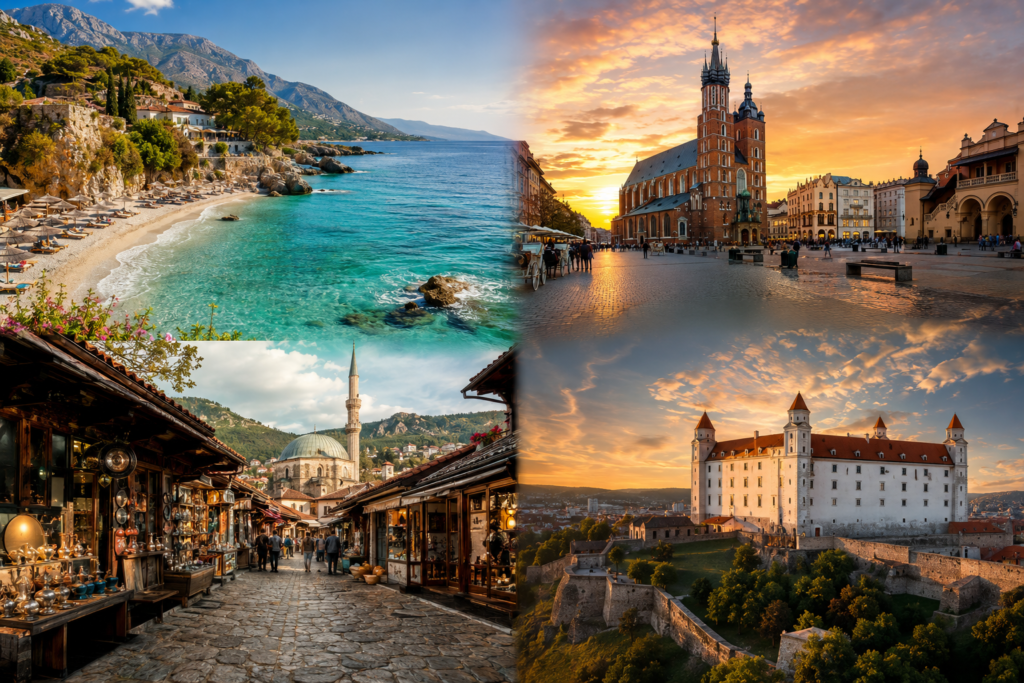
From my experience, most travelers overpay for one simple reason: they plan their Europe trip around the famous capitals — Paris, Amsterdam, Barcelona, Rome. These cities are beautiful, no question. But they’re also among the most expensive urban destinations on the planet.
What I’ve seen is that travelers land in a big city, pay €150+/night for a mediocre hotel, eat near tourist squares, and use overpriced tourist transport. They come home saying ‘Europe is so expensive’ — when really, they just visited the wrong places in the wrong way.
- Choosing tourist capitals over budget-friendly alternatives
- Booking flights too late or on peak weekends
- Not using budget airlines for inter-Europe travel
- Ignoring local transport in favor of taxis and tourist shuttles
- Eating in tourist zones instead of local neighborhoods
What Actually Makes a European Country “Cheap”
A country earns the ‘budget-friendly’ label based on several real factors — not just one number. Here’s the framework I use:
- Accommodation costs (hostel dorms, budget hotels, Airbnb)
- Food and drink prices (local restaurants vs tourist spots)
- Internal transport (buses, trains, metro)
- Entrance fees and activities
- Currency strength vs your home currency
The sweet spot? Countries where all five factors align. Albania, Bulgaria, and Romania consistently hit every category. So does Bosnia, Serbia, and parts of Turkey.
How This Guide Helps You Travel Smarter in 2026
This guide covers 15 of the cheapest countries in Europe to visit, with real daily budget estimates, what travelers love most, and honest downsides. I also cover planning strategy, common budget-killing mistakes, and a final action plan based on your travel style.
If you’re still deciding on solo vs group travel, my guide on solo travel Europe destinations breaks down the best setups for independent travelers.
The Cheapest Countries in Europe at a Glance
| Category | Top Pick | Runner-Up | Budget Per Day |
| Backpackers | Albania | Bulgaria | $25–$40 |
| Couples | Romania | Hungary | $50–$80 |
| Food & Transport | Bosnia & Herzegovina | North Macedonia | $20–$35 |
| Hidden Gems | Montenegro | Slovakia | $30–$50 |
| Best Value/Experience | Poland | Czech Republic | $40–$65 |
Cheapest Overall for Backpackers
Albania wins this category without question. Dorm beds from €8, street food for €1–€2, and beaches that rival Croatia — at a fraction of the price. Bulgaria is a close second, especially if you base yourself in Sofia or head to the Black Sea coast in shoulder season.
Cheapest for Couples
Romania offers the best combination of romance, scenery, and affordability. Brasov is stunning and costs almost nothing compared to Western Europe. A couple can eat out every night, stay in a lovely guesthouse, and do day trips — all for under €60–80/day combined.
Cheapest for Food and Transportation
Bosnia and Herzegovina is shockingly affordable. A full Bosnian meal (cevapi, bread, yogurt) in Sarajevo costs around €3–4. Bus travel between cities rarely exceeds €10. This country consistently surprises even seasoned budget travelers.
Cheapest Hidden Gem Destinations
North Macedonia is still flying under the radar. Skopje has a lively food and bar scene, Lake Ohrid is one of the most beautiful spots in the Balkans, and your money goes remarkably far. Montenegro offers stunning Adriatic coastline at prices Croatia stopped offering a decade ago.
Best Value vs Experience Ratio
Poland takes this one. You get a rich history, incredible food scene (pierogi for €2!), excellent transport connections, and internationally recognized cities like Krakow and Warsaw — all at Eastern European prices. It’s also one of the easiest countries for first-time budget travelers.
| Why You Can Trust This Guide This guide is built on first-hand research, conversations with experienced budget travelers, and verified cost data from Hostelworld, Numbeo, Rome2rio, and Skyscanner. Every budget estimate reflects real 2025–2026 pricing. Cross-referenced with active travel communities for on-the-ground accuracy. |
15 Cheapest Countries in Europe to Visit
Albania — Europe’s Budget Beach Paradise
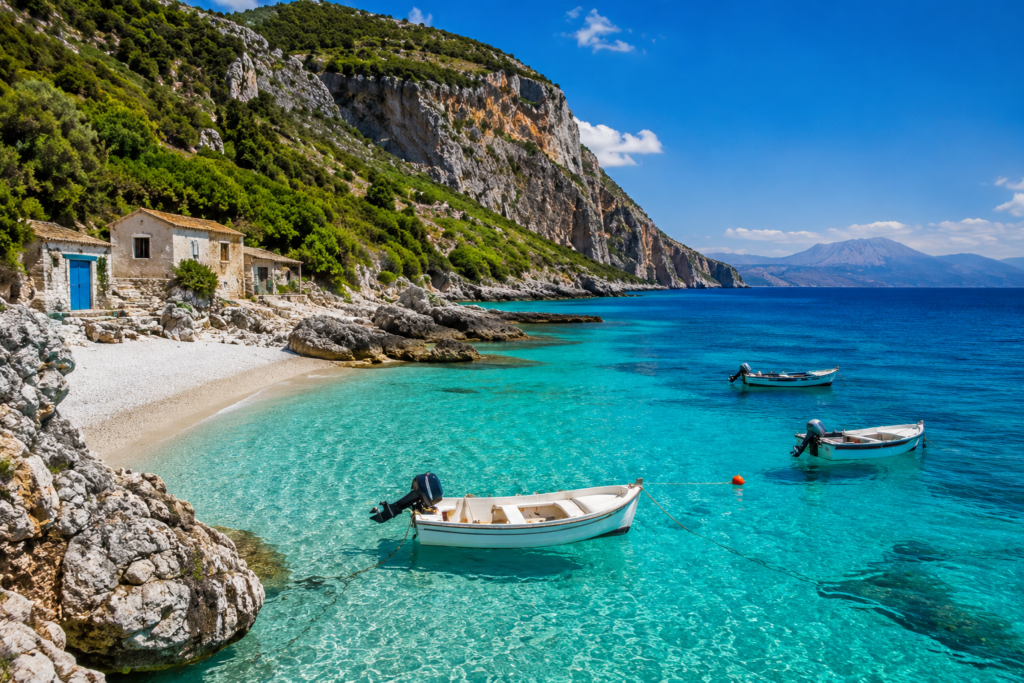
Albania is the budget traveler’s secret weapon. I’ve spoken to dozens of backpackers who call it their favorite discovery — and the reason is simple: it delivers an extraordinary experience at prices that feel almost unreal by European standards.
| Cost Category | Average Price |
| Hostel dorm | €8–€12/night |
| Budget hotel (double) | €25–€40/night |
| Local restaurant meal | €3–€6 |
| Beer (local) | €1–€2 |
| City bus ticket | €0.30–€0.50 |
| Daily budget (backpacker) | €25–€40 |
- Best cities: Tirana, Berat, Gjirokaster, Saranda, Himara
- Albania’s Riviera offers beaches as beautiful as Croatia — without the crowds or the cost
- Local cuisine (byrek, tave kosi, fresh seafood) is exceptional and dirt cheap
- Albanians are genuinely welcoming to tourists — rare in heavily touristed Europe
| Pro Tip Visit Berat (the ‘City of a Thousand Windows’) — it’s a UNESCO site that costs almost nothing to explore and is dramatically less crowded than comparable sites in Western Europe. |
Bulgaria — Low Costs Without Losing Comfort
Bulgaria is where budget travel meets genuine comfort. Sofia has excellent infrastructure, a growing food scene, and hostel beds starting around €10. The Black Sea coast (Varna, Sozopol) gives you a proper beach holiday for what you’d spend on one dinner in Mykonos.
- Daily budget: €30–€50 (mid-range traveler €60–€80)
- Plovdiv is one of the most charming old towns in all of Europe — and nearly free to explore
- Bulgaria uses the Bulgarian Lev (BGN) — not the Euro — giving your money extra stretch
- Rila Monastery and the Seven Rila Lakes are world-class sights with minimal entrance costs
| Key Takeaway Bulgaria punches well above its weight on quality vs. cost. If you want a comfortable trip without hostel-hopping on a shoestring, Bulgaria hits the sweet spot. |
Romania — Affordable Castles, Mountains, and Cities
Romania is one of my top recommendations for first-time budget travelers in Europe. It has incredible variety — Gothic castles, the Carpathian Mountains, the Danube Delta, and buzzing cities like Cluj-Napoca and Bucharest — all at prices that feel like they’re from a decade ago in Western Europe.
- Daily budget: €30–€55 (backpacker), €60–€90 (couple)
- Brasov is often cited as one of Europe’s most beautiful towns — and it’s very affordable
- Bran Castle (‘Dracula’s Castle’) entrance fee: around €13
- Romania uses the Romanian Leu — not Euro — meaning exchange rates work in most visitors’ favor
- Public transport between cities is cheap and reliable (CFR trains, FlixBus)
Bosnia and Herzegovina — Europe’s Underrated Budget Gem
If there’s one country I always push people toward that they consistently overlook, it’s Bosnia and Herzegovina. Sarajevo is one of the most culturally rich cities in Europe — Ottoman bazaars, Austro-Hungarian architecture, heartbreaking war history — and it costs almost nothing to experience.
- Daily budget: €20–€35 (backpacker)
- Mostar’s famous Stari Most (Old Bridge) is free to view and surrounded by cheap cafes
- Cevapi (grilled sausage in flatbread) costs €2–€3 and is genuinely delicious
- Budget accommodation is some of the most hospitable in Europe
- Easy day trips to Kravice Waterfalls and Pocitelj
| Common Mistake Don’t skip Bosnia because you haven’t heard much about it. That’s exactly why it’s still affordable. Once it gets more mainstream attention, prices will rise. |
Serbia — One of Europe’s Cheapest City Breaks
Belgrade has quietly built a reputation as one of Europe’s best city-break destinations — great nightlife, incredible food, a vibrant arts scene — and it still costs a fraction of Prague or Budapest. Serbia uses the Serbian Dinar, and your money goes far.
- Daily budget: €25–€45
- Belgrade’s fortress (Kalemegdan) is free to explore
- Rakija (local brandy) and craft beer bars are extremely affordable
- Novi Sad hosts EXIT Festival — one of Europe’s biggest music events at reasonable ticket prices
- Serbia is outside the Schengen Zone — useful for travelers managing 90-day limits
Hungary — Affordable Thermal Baths and Nightlife
Budapest is often called ‘the Paris of Eastern Europe’ — and unlike Paris, it’s genuinely affordable. The thermal baths (Szechenyi, Gellert) cost around €20–25 for a full day. The ruin bars in the Jewish Quarter are legendary and cheap. And the Hungarian forint means prices haven’t fully caught up with the experience on offer.
- Daily budget: €35–€60 (budget), €70–€110 (mid-range)
- One of the most photogenic capitals in Europe — the Danube riverfront at night is stunning
- Hungarian cuisine (goulash, langos, chimney cake) is filling and affordable
- Day trips to Eger, Szentendre, and Lake Balaton are easy and cheap
Poland — Best Cheap Country for First-Time Europe Travelers
Poland is my top pick for anyone doing their first European budget trip. It’s easy to navigate, English is widely spoken in cities, transport is excellent, and prices remain low despite Poland’s rapid economic growth. Krakow, in particular, is one of the most visitor-friendly cities in Europe.
- Daily budget: €35–€55 (backpacker), €65–€95 (mid-range)
- Krakow’s Old Town is a UNESCO World Heritage Site — free to walk through
- Pierogi and zapiekanki cost €1.50–€3 — some of the best cheap eating in Europe
- Auschwitz-Birkenau historical site is free (booking required) — a profound and important visit
- Poland uses the Polish Zloty — not the Euro — adding to your purchasing power
Looking for more inspiration? My guide on how to plan a trip to Europe covers the full logistics from flights to accommodation booking strategies.
Montenegro — Cheap Coastal Travel Alternative to Croatia
Montenegro is what Croatia used to be before it became expensive. The Adriatic coastline is just as stunning, the old towns (Kotor, Budva) are just as beautiful — but the prices haven’t caught up yet. In my view, 2026 might be the last few years to catch Montenegro truly cheap.
- Daily budget: €35–€60
- Kotor’s old town is a UNESCO site — free to explore (small wall-climbing fee of €8)
- Bay of Kotor is arguably the most beautiful bay in the Mediterranean
- Combine easily with Albania or Serbia for a Balkan budget circuit
North Macedonia — Ultra-Budget Balkan Destination
North Macedonia is often the last country on travelers’ lists — which makes it one of the most rewarding to visit. Skopje’s bizarre neoclassical architecture is genuinely unlike anything else in Europe, and Lake Ohrid is a UNESCO-listed gem that most people have never heard of.
- Daily budget: €20–€35 — one of the lowest in Europe
- Lake Ohrid is considered among the oldest lakes in the world and is stunningly beautiful
- Street food and local restaurants are exceptionally cheap even by Balkan standards
- Matka Canyon — a breathtaking gorge just 15 minutes from Skopje — costs almost nothing
Czech Republic — Where Budget and Beauty Meet
Prague has gotten more expensive over the years — but it’s still significantly cheaper than Paris, Amsterdam, or Zurich. And beyond Prague, the Czech Republic remains wonderfully affordable. Cesky Krumlov, Olomouc, and Kutna Hora offer world-class experiences at genuinely low prices.
- Daily budget: €40–€65 (Prague), €30–€50 (smaller cities)
- Czech beer is famous for a reason — and at €1–€2 per half-liter, it’s still incredibly cheap
- Czech cuisine (svickova, goulash, trdelnik) is hearty and inexpensive
- Skip overpriced tourist restaurants near Old Town Square — walk 10 minutes and save 40%
Portugal — Western Europe’s Budget-Friendly Surprise
Portugal is the exception in Western Europe — a country that remains relatively affordable despite being absolutely beautiful and perfectly positioned for travel. Porto in particular delivers exceptional value: stunning architecture, world-class wine (port wine tastings from €5), and a food scene that competes with anywhere in Europe.
- Daily budget: €45–€70 (Lisbon/Porto), €35–€55 (Algarve/smaller towns)
- Pastel de nata (custard tart) costs €1–€1.20 — the best €1 you’ll spend in Europe
- Portugal’s train network is affordable and scenic
- The Algarve beaches are world-class — cheaper than equivalent Spanish or Italian destinations
Considering extending your trip into France? My guide to the best places to visit in France highlights which French regions still offer genuine value.
Slovakia — Cheap Nature and Mountain Escapes
Slovakia doesn’t get nearly enough attention. Bratislava is one of Europe’s smallest and most charming capitals — easily day-trippable from Vienna — but spending a few nights there saves a fortune. The High Tatras offer ski and hiking experiences at a fraction of Austrian or Swiss Alpine costs.
- Daily budget: €30–€50
- High Tatras mountain hiking is world-class and almost entirely free
- Slovak food (bryndzove halusky — potato dumplings with sheep cheese) is delicious and very cheap
- Bratislava is 1 hour from Vienna by train — a smart pairing to cut accommodation costs
Latvia — Affordable Northern Europe Experience
Latvia is the gateway to budget Northern Europe. Riga’s Old Town is stunning, the Art Nouveau architecture is exceptional (Riga has more Art Nouveau buildings than any city in Europe), and prices are significantly lower than Scandinavia next door.
- Daily budget: €40–€65
- Riga’s Central Market — one of Europe’s largest — is a feast of cheap, excellent local food
- Baltic amber, linen, and crafts are great value souvenirs
- Jurmala beach resort is 25 minutes from Riga and very affordable
Lithuania — One of Europe’s Cheapest Capitals
Vilnius is one of Europe’s most underrated capital cities and one of its cheapest. The baroque Old Town is a UNESCO site, the restaurant scene is genuinely excellent, and accommodation is very affordable by EU capital standards.
- Daily budget: €35–€55
- Uzupis — Vilnius’s self-declared ‘republic’ of artists — is a quirky free attraction
- Lithuanian food scene has improved dramatically — great value farm-to-table restaurants
- Hill of Crosses near Siauliai is one of Lithuania’s most powerful and unique sights
Turkey (European Side) — Maximum Value for Budget Travelers
Istanbul straddles Europe and Asia — and its European side (Sultanahmet, Beyoglu) is one of the most extraordinary destinations on the continent. The Turkish Lira has weakened significantly, making Turkey exceptional value for foreign visitors.
- Daily budget: €20–€40 (extraordinary value given the experience)
- Hagia Sophia, Blue Mosque, Grand Bazaar — world-class free or low-cost sights
- Turkish street food (simit, balik ekmek, doner) costs €1–€3
- Hammam experience from €15–€25 — an authentic cultural highlight
- e-Visa available for most nationalities — easy to obtain online
What You’ll Actually Spend Per Day in Each Country
Budget Backpacker Daily Costs
| Country | Accommodation | Food | Transport | Total/Day |
| Albania | €8–€12 | €6–€10 | €2–€4 | €20–€30 |
| Bosnia & Herz. | €10–€15 | €5–€9 | €2–€5 | €20–€33 |
| North Macedonia | €10–€14 | €5–€8 | €2–€4 | €20–€30 |
| Serbia | €10–€15 | €7–€12 | €3–€5 | €22–€35 |
| Bulgaria | €10–€15 | €7–€12 | €3–€6 | €22–€38 |
| Romania | €12–€18 | €8–€13 | €3–€6 | €25–€42 |
| Hungary | €12–€18 | €10–€15 | €4–€7 | €28–€45 |
| Poland | €12–€18 | €9–€14 | €4–€7 | €28–€44 |
| Turkey (Eur.) | €10–€18 | €6–€12 | €3–€5 | €22–€38 |
| Czech Republic | €14–€20 | €10–€16 | €4–€8 | €30–€50 |
| Portugal | €14–€22 | €12–€18 | €4–€8 | €32–€52 |
Mid-Range Traveler Costs
If you’re not on a shoestring but still want value, the Balkans and Eastern Europe offer an excellent mid-range experience. A mid-range traveler (private hotel room, two restaurant meals daily, occasional activities) can expect:
- Albania, North Macedonia, Bosnia: €50–€75/day
- Bulgaria, Serbia, Romania: €60–€90/day
- Hungary, Poland, Czech Republic: €80–€120/day
- Portugal, Latvia, Lithuania: €85–€130/day
Accommodation Price Comparison
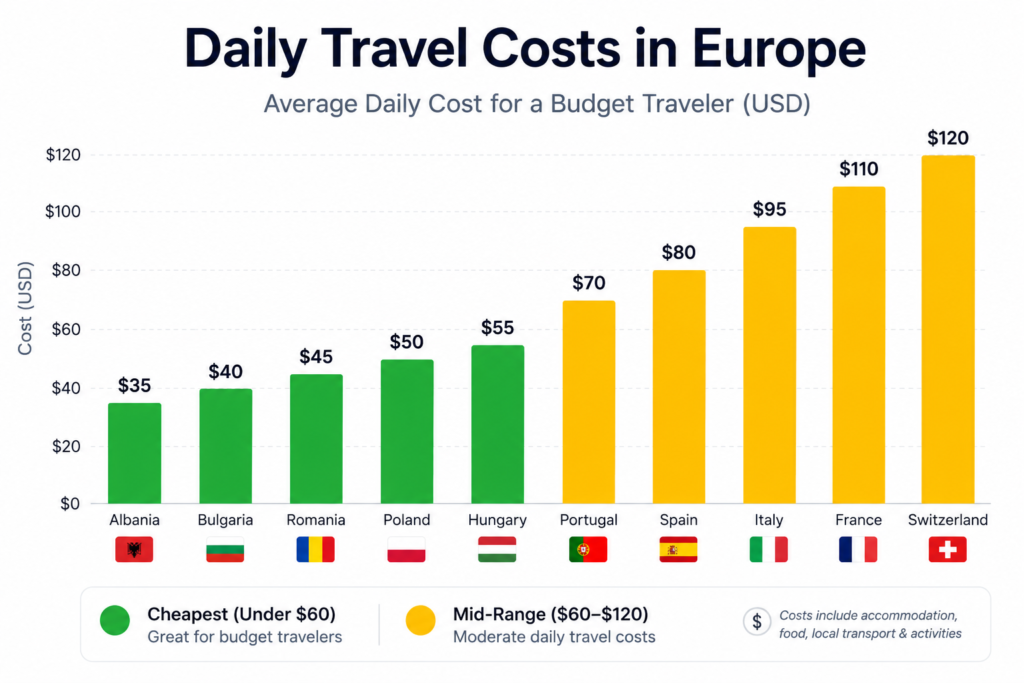
| Country | Hostel Dorm | Budget Private | Mid-Range Hotel |
| Albania | €8–€12 | €20–€35 | €45–€70 |
| Bulgaria | €10–€15 | €25–€40 | €55–€85 |
| Romania | €10–€15 | €25–€45 | €55–€90 |
| Bosnia | €10–€14 | €22–€38 | €50–€80 |
| Poland | €12–€18 | €30–€50 | €65–€100 |
| Portugal | €14–€22 | €40–€70 | €80–€140 |
| Czech Rep. | €14–€20 | €35–€60 | €70–€120 |
Food and Restaurant Cost Breakdown
Here’s what I’ve found: food cost is the single biggest differentiator between ‘affordable’ and ‘expensive’ Europe. In Albania or Bosnia, a full sit-down meal with a drink costs €4–€7. The same quality in Paris or Zurich? €25–€40.
- Street food / fast casual: €1–€4 (Balkans), €3–€6 (Central Europe), €5–€10 (Western Europe)
- Local restaurant main course: €4–€8 (Balkans), €8–€14 (Central Europe), €15–€30 (Western Europe)
- Coffee (espresso): €0.80–€1.50 (Eastern Europe), €1.50–€3.50 (Western Europe)
- Beer (local, bar): €1–€2 (Balkans), €2–€4 (Central Europe), €5–€9 (Western Europe)
Public Transportation Costs
Transport is where budget travelers can make or lose significant money. Local public transport in Eastern Europe is absurdly cheap:
- City bus/metro: €0.30–€0.80 (Balkans), €0.80–€2 (Central Europe)
- Intercity bus (2–3 hours): €5–€12 (Eastern Europe), €12–€25 (Western Europe)
- Train (2–3 hours): €8–€20 (Eastern/Central Europe), €25–€80+ (Western Europe)
The biggest transport saving? Booking budget airlines for major hops instead of rail.
Cheapest Countries for Long-Term Stay
If you’re considering slow travel or a long-term base in Europe, these countries offer the best combination of low cost, quality of life, and visa accessibility:
- Albania (Tirana): monthly costs €600–€900, no visa required for most nationalities for 1 year
- Romania (Cluj-Napoca): €900–€1,400/month, EU country with full infrastructure
- Bulgaria (Sofia): €900–€1,400/month, EU country
- Serbia (Belgrade): €800–€1,200/month, not Schengen (useful for long-term visitors)
Interested in slow travel as a long-term approach? My guide on slow travel explains how to make a destination your temporary home and cut costs dramatically.
How to Travel Europe Cheap Without Ruining the Experience
The Budget Travel Framework That Actually Works
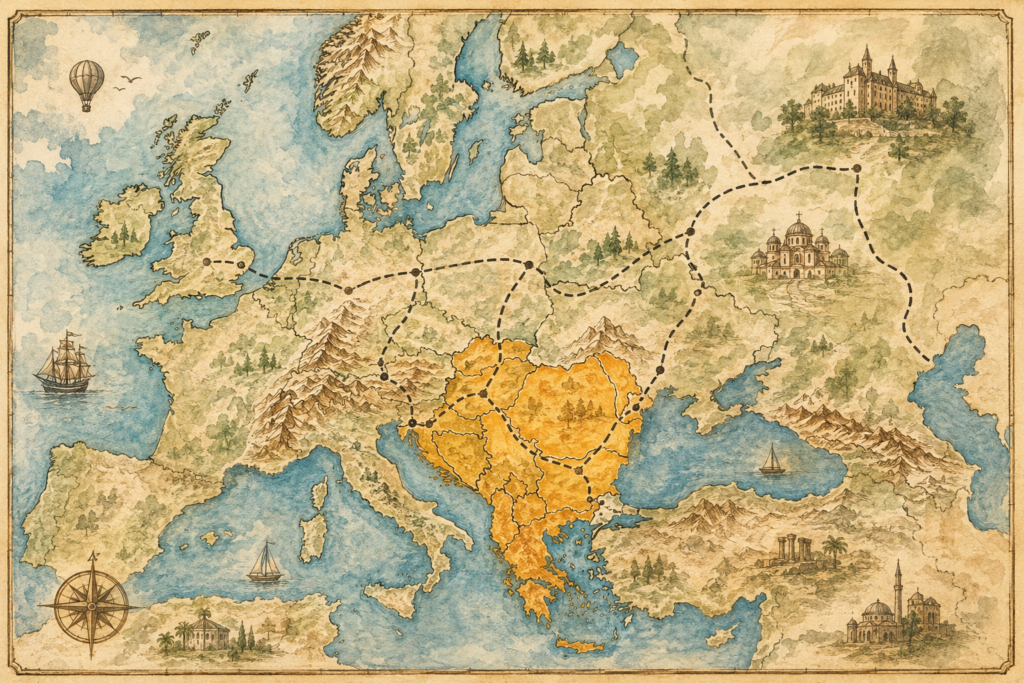
After analyzing how successful budget travelers do it vs. how others end up overspending, here’s what actually works:
- Pick cheap base countries — not cheap hotels in expensive countries
- Use budget airlines for big hops (Wizz Air, Ryanair, easyJet)
- Travel overland within cheap regions (Balkan bus routes, Central European trains)
- Eat one meal per day at a local market or street food stand
- Book accommodation 3–6 weeks ahead — not last minute, not too far in advance
- Use free activities (parks, walking tours, historic sites) as your primary entertainment
Countries That Pair Well Together
| Route | Countries | Why It Works | Est. Budget (2 weeks) |
| Balkan Circuit | Albania + Montenegro + Bosnia + Serbia | Cheap overland travel, similar culture | €600–€900 |
| Central European Loop | Poland + Czech Rep + Hungary + Slovakia | Great transport links, easy navigation | €800–€1,200 |
| Iberian Budget | Portugal + Spain (cheaper regions) | Value in Portugal, Spain for contrast | €900–€1,400 |
| Baltic Budget | Lithuania + Latvia + Estonia (partially) | Short distances, cheap flights in | €800–€1,200 |
Cheapest Months to Visit Europe
Timing is one of the most powerful budget levers. Here’s what I’ve found works consistently:
- Best value months: March–April and October–November (shoulder season)
- Avoid: June–August — prices spike 30–60% in popular destinations
- Winter (Nov–Feb) in Balkans and Central Europe: ultra-cheap but cold — great for city trips
- Spring (April–May): my personal favorite — mild weather, low prices, fewer tourists
- For beach destinations: May and September deliver warm weather at shoulder-season prices
Budget Airlines Most Travelers Miss
Most travelers know Ryanair. Fewer know the full ecosystem of budget carriers that serve Eastern Europe:
- Wizz Air — dominant in Central/Eastern Europe (Poland, Romania, Bulgaria, Serbia, Albania)
- easyJet — good coverage across Western and Southern Europe
- Ryanair — strong in Western Europe, also serves some Eastern European routes
- Blue Air — Romania’s budget carrier, great for Balkan routes
| Pro Tip Set up price alerts on Google Flights and Skyscanner for flexible travel dates. Being willing to fly on a Tuesday or Wednesday can cut airfares by 20–40%. |
Rail Pass vs Budget Flights
This is one of the most common questions I get. Here’s my honest breakdown:
| Factor | Rail Pass | Budget Flights |
| Best for | Western/Central Europe | Balkan/Eastern Europe |
| Cost efficiency | Good for 4+ countries | Better for 2–3 country hops |
| Flexibility | High — hop on/off | Medium — must book ahead |
| Scenic value | Excellent | None (you’re in the air) |
| City center access | Yes — central stations | Often need airport transfer |
| Speed | Slower but comfortable | Faster for long distances |
My recommendation: use budget flights for distances over 4 hours, and trains/buses for shorter hops within the same region.
Mistakes That Kill Your Europe Budget Fast
- Booking flexible/refundable fares when you don’t need them — adds 20–40% to flight costs
- ATM fees — use a fee-free travel card (Wise, Revolut) to avoid 3–5% charges on every withdrawal
- Buying travel insurance at the airport — get it before you go, ideally at booking
- Overpacking checked luggage — budget airlines charge €20–€50 per checked bag
- Taxi from airport — always research the cheapest transfer option before you land
Cheap Europe Travel for Beginners vs Experienced Travelers
Best Countries for First-Time Budget Travelers
If this is your first budget Europe trip, I’d recommend starting somewhere forgiving — good English, solid infrastructure, and a clear tourist trail to follow:
- Poland — great infrastructure, English spoken in cities, easy to navigate
- Czech Republic — straightforward transport, good tourist signage, very safe
- Hungary — Budapest is a dream for first-timers, great English in tourist areas
- Portugal — Western European comforts at Eastern European prices
Heading to Europe alone for the first time? My guide on solo travel destinations covers safety, social tips, and how to make the most of traveling alone.
Countries Better for Experienced Backpackers
These countries reward travelers who know how to navigate independently and go with the flow:
- Albania — infrastructure still developing, navigation can be challenging, but the payoff is huge
- North Macedonia — less tourist infrastructure, more authentic experience
- Bosnia & Herzegovina — some language barrier, less English outside tourist zones
- Turkey — navigating Istanbul requires urban savvy, but it’s deeply rewarding
Where English Is Easier for Travelers
| Country | English Proficiency | Notes |
| Poland | High | Especially in major cities |
| Czech Republic | High | Prague very English-friendly |
| Hungary | Medium-High | Good in Budapest, less so rural |
| Romania | Medium-High | Young people often fluent |
| Bulgaria | Medium | Improving rapidly in cities |
| Albania | Medium | Italian often more useful |
| Bosnia | Low-Medium | BCS language dominates |
| Serbia | Medium | Belgrade good, outside varies |
Safest Cheap Countries in Europe
Safety is a real concern worth addressing directly. All 15 countries in this guide are genuinely safe for travelers. Some specific notes:
- Poland, Czech Republic, Hungary, Slovakia: extremely safe, low petty crime
- Portugal, Latvia, Lithuania: very safe, standard city-level awareness needed
- Bulgaria, Romania: safe overall — standard precautions in cities
- Albania, Montenegro, Bosnia, Serbia: safe for tourists — local conflicts are historical, not current
| Key Takeaway The Balkans have a historical reputation that doesn’t reflect current reality. Modern Albania, Bosnia, Serbia, and North Macedonia are safe, welcoming, and stable destinations for travelers. |
Easiest Visa-Friendly Destinations
For travelers from outside the EU (US, UK, Australia, Canada, etc.), visa requirements vary:
- Schengen Zone (Poland, Czech Rep, Hungary, Slovakia, Latvia, Lithuania, Portugal): 90 days in 180-day period
- Albania: up to 1 year visa-free for many nationalities
- Serbia: 90 days without visa for most Western passports
- Bosnia: 90 days for most nationalities
- Montenegro: 90 days for most nationalities
- Turkey: e-Visa available online for most nationalities (~$50)
Cheap European Countries Most Tourists Still Ignore
Places Becoming Popular Too Fast
These destinations are still affordable but gaining momentum — visit before prices rise:
- Albania (especially the Riviera): discovered by backpackers years ago, now going mainstream
- North Macedonia: started appearing on ‘hidden gem’ lists — window closing
- Montenegro: still cheaper than Croatia but gap is shrinking
Countries Still Surprisingly Affordable
- Bosnia and Herzegovina: consistently surprises people with how cheap it still is
- Slovakia: overshadowed by neighbors, genuinely cheap and beautiful
- Lithuania: Vilnius is one of Europe’s most affordable EU capitals
- Latvia: Riga still offers excellent value despite its growing reputation
Cheapest Coastal Destinations
- Albania Riviera (Himara, Dhermi, Ksamil) — cheapest quality beaches in Europe
- Montenegro (Budva, Ulcinj) — Adriatic beaches without Croatian prices
- Bulgaria Black Sea Coast (Varna, Sozopol) — calm, warm, surprisingly affordable
- Latvia/Lithuania Baltic Coast — cool water but beautiful and very affordable
- Portugal Algarve — priciest on this list but still cheaper than French Riviera or Amalfi
Cheapest Mountain and Nature Destinations
- Slovakia High Tatras — world-class alpine hiking at minimal cost
- Romania Carpathians — superb hiking and skiing, tiny prices
- North Macedonia (Mavrovo National Park) — stunning and almost empty
- Bosnia (Sutjeska National Park) — Europe’s oldest national park, rarely visited
- Bulgaria (Rila/Pirin Mountains) — Seven Rila Lakes is breathtaking
Best Cheap Cities for Digital Nomads
| City | Country | Monthly Cost | Internet | Nomad Scene |
| Tirana | Albania | €700–€1,000 | Excellent | Growing fast |
| Sofia | Bulgaria | €900–€1,300 | Excellent | Established |
| Bucharest | Romania | €900–€1,400 | Excellent | Strong |
| Belgrade | Serbia | €800–€1,200 | Very good | Strong |
| Vilnius | Lithuania | €1,000–€1,500 | Excellent | Good |
| Krakow | Poland | €1,000–€1,600 | Excellent | Strong |
Real Budget Examples for Different Travelers
One-Week Europe Budget Example
Let’s take a real example: one week in Poland (Krakow + Warsaw), traveling solo as a backpacker.
| Category | Cost |
| Flights (London to Krakow to Warsaw to London) | €80–€120 (Ryanair/Wizz Air) |
| Accommodation (7 nights hostel dorm) | €85–€130 |
| Food (mix of street food + restaurants) | €70–€100 |
| Transport (within cities + intercity bus) | €30–€45 |
| Activities (Auschwitz, castle, etc.) | €25–€40 |
| Total (7 days) | €290–€435 |
One-Month Backpacking Budget
A month across the Balkans (Albania, Montenegro, Bosnia, Serbia) with a mix of hostels, local food, and buses:
- Accommodation: €250–€380
- Food: €180–€280
- Transport (overland buses + 1 budget flight in): €120–€180
- Activities and entrance fees: €60–€100
- Miscellaneous (SIM card, insurance, incidentals): €80–€120
- Total one month: €690–€1,060
That’s a full month of Balkan travel — beautiful beaches, UNESCO sites, excellent food — for under €1,100. Almost impossible to replicate in Western Europe.
Budget for Couples
Couples have a cost advantage — private rooms split between two people often cost less per person than a hostel dorm. Here’s a realistic 10-day couples budget in Romania:
- Private double rooms (10 nights): €200–€350 combined
- Food (eating out daily, mix of local and nicer restaurants): €200–€280
- Transport (trains, buses, car rental for mountain day trips): €120–€180
- Activities: €60–€90
- Total for couple (10 days): €580–€900 combined / €290–€450 per person
Planning a family trip instead? My guide to best family vacation destinations in Europe covers the best destinations for families across different budgets.
Student Europe Budget Plan
Students have additional advantages: ISIC card discounts, student rail rates, and a natural tendency toward hostel social culture. Here’s a realistic 3-week student budget across Central Europe:
- Book Wizz Air or Ryanair flights 8–12 weeks in advance: €80–€140 total for regional hops
- Stay in HI Hostels or Hostelworld-reviewed budget spots: €10–€14/night
- Use student discounts for museums and sites: saves 30–50% on entrance fees
- Eat at student canteens and local lunch spots: €3–€6/meal
- Get a Revolut or Wise card to avoid currency fees: saves €30–€80 on a 3-week trip
Total realistic 3-week student budget: €600–€900 all-in from UK/Western Europe.
Solo Traveler Budget Breakdown
Solo travel has one structural disadvantage — you pay full price for accommodation without sharing. Here’s how to offset that:
- Use hostels — but choose ones with social atmospheres to get value beyond just sleep
- Join free walking tours in every city — €0 cost, great orientation, meet fellow travelers
- Cook one meal per day in hostel kitchens — cuts food budget by 25–35%
- Travel in slower seasons when single supplements are less common in guesthouses
Solo female travelers have specific considerations — my guide on safe solo female travel destinations highlights the safest and most welcoming spots across Europe.
Travel Tools That Save the Most Money in Europe
Budget Flight Search Tools
- Google Flights — best for flexible date searches and price tracking
- Skyscanner — excellent for open-jaw tickets and multi-city itineraries
- Wizz Air app — direct booking saves fees, good sale notifications
- Kiwi.com — finds creative combinations (fly into one city, out of another)
Cheap Accommodation Platforms
- Hostelworld — the best hostel-specific platform with verified reviews
- Booking.com — best for budget hotels and guesthouses; free cancellation options
- Airbnb — sometimes cheaper than hotels for 5+ night stays in smaller cities
- Couchsurfing — free stays with locals (requires account building and active participation)
Train and Bus Apps
- Rome2rio — compares all transport options between any two points in Europe
- FlixBus app — Europe’s best intercity bus network, very affordable
- Trainline — book EU train tickets across multiple operators in one place
- Omio — good for multi-modal journeys combining bus, train, and ferry
- Local apps: RegioJet (Czech/Slovak), PKP (Poland), CFR (Romania)
Currency and Expense Tracking Apps
- Wise (formerly TransferWise) — the best travel money card, real exchange rate, no hidden fees
- Revolut — popular with European travelers, excellent for multi-currency use
- Trail Wallet — simple expense tracker for budget travelers
- XE Currency — offline currency converter for when you have no data
Travel Insurance Worth Considering
Don’t skip insurance to save money — one medical incident or cancellation can cost more than your entire trip. These options offer genuine value:
- World Nomads — popular with backpackers, covers adventure activities
- SafetyWing — monthly subscription model, good for long-term travelers
- True Traveller (UK-based) — excellent value for European trips
Mistakes That Make Europe Feel More Expensive Than It Is
Visiting Only Tourist Capitals
This is mistake number one. Paris, Rome, Amsterdam, Barcelona — these are beautiful but brutally expensive. What I’ve seen is that travelers spend €150/night in these cities when an equally enjoyable experience exists 2 hours away for a third of the price. If you visit Prague, spend 2 nights in Cesky Krumlov. If you visit Budapest, do a day in Eger. Layer your itinerary.
Booking Flights Too Late
Budget airlines sell their cheapest seats first. Book 6–12 weeks ahead for the best prices. Booking 1–2 weeks out on Ryanair or Wizz Air can mean paying 3–5x more than early bookers for the same seat. I’ve seen €9 flights become €89 in a matter of weeks.
Ignoring Currency Conversion Costs
Dynamic currency conversion (when a card terminal asks ‘pay in your home currency?’) is a trap. Always choose the local currency. And use a fee-free card (Wise or Revolut) to avoid the 2–4% foreign transaction fees that standard banks charge. On a month-long trip, this can save €80–€150.
Overusing Trains in Certain Regions
Trains are perfect for Central Europe (Poland, Czech Republic, Hungary). In the Balkans, buses are often faster, cheaper, and more direct. Don’t assume train = cheap everywhere. In Albania and Bosnia, buses and shared minibuses (furgons) are the local transport of choice.
Staying in Overpriced Tourist Areas
Accommodation near major attractions is always overpriced. In every city, walking 10–15 minutes from the tourist center cuts accommodation costs by 30–50%. Use Google Maps to check walking distance before booking.
| Common Mistake Summary The biggest budget-killers are: wrong destination choice, wrong accommodation location, no travel money card, and booking too late. Solve these four things and your Europe budget improves dramatically. |
Frequently Asked Questions About Cheap European Countries
What is the cheapest country in Europe to visit?
Based on overall daily costs in 2025–2026, Albania and North Macedonia consistently rank as the cheapest countries in Europe to visit. A backpacker can travel comfortably in both for €20–€30 per day including accommodation, food, and local transport. Bosnia and Herzegovina is a close third.
Which European country is cheapest for tourists?
For tourists (not just backpackers), Bulgaria offers the best combination of value and comfort. Tourist infrastructure is solid, prices remain low, and you get both city and beach options. Poland is an excellent runner-up — especially for first-time visitors who want reliability alongside affordability.
Can you travel Europe on $50 a day?
Yes — easily in Eastern Europe and the Balkans. $50/day in Albania, Bulgaria, Romania, Bosnia, Serbia, or North Macedonia gives you a comfortable experience: decent accommodation, two meals out, local transport, and activities. In Western Europe, $50/day requires strict budget discipline and mostly free activities.
Is Eastern Europe cheaper than Western Europe?
Significantly, yes. As a rough guide, Eastern European countries cost 40–65% less than Western European equivalents across accommodation, food, and transport. A mid-range dinner for two in Bucharest might cost €25; the equivalent in Paris or Amsterdam runs €80–€120. The gap is real and substantial.
What is the safest cheap country in Europe?
Poland, Czech Republic, and Portugal are among the safest countries in Europe by any metric — and all remain affordable. For the Balkans, Bulgaria and Romania have very low crime rates relative to their costs. Albania, Serbia, and Bosnia are also safe for tourists despite historical reputations suggesting otherwise.
Which cheap European country has the best beaches?
Albania’s Riviera is the top answer in pure value-to-quality terms — beaches rivaling Croatia and Greece at a fraction of the price. Montenegro is a close second. Bulgaria’s Black Sea coast offers calmer, warmer water with excellent local amenities. Portugal’s Algarve is the priciest of the budget beach options but still cheaper than France or Italy.
Where can couples travel cheaply in Europe?
Romania is my top recommendation for couples — it’s romantic (Brasov, Sinaia, Cluj-Napoca), scenically diverse, and affordable even when staying in private rooms and eating at local restaurants. Hungary (Budapest) is superb for a short couples break. Portugal offers excellent value and is widely considered one of Europe’s most beautiful countries.
How to Choose the Right Cheap European Country for Your Budget
If You Want Beaches
Go to Albania first (Riviera), Montenegro second, Bulgaria Black Sea coast third. Skip Croatia and Greece if you’re on a tight budget — the price gap is substantial. Albania Riviera in May or September hits the sweet spot of weather, low prices, and smaller crowds.
If You Want Cities and Nightlife
Belgrade (Serbia) and Budapest (Hungary) offer the best value city-break nightlife in Europe — legendary bar scenes at prices that feel almost unrealistically cheap by Western standards. Krakow (Poland) is another excellent option, especially for first-timers.
If You Want Nature and Hiking
Slovakia (High Tatras), Romania (Carpathians), and Bulgaria (Rila Mountains) are your best picks. All offer world-class alpine experiences at a tiny fraction of Swiss or Austrian Alpine costs. North Macedonia’s Mavrovo National Park is an extraordinary and almost unknown alternative.
If You Want the Cheapest Possible Trip
North Macedonia, Albania, and Bosnia is your route. Three weeks across all three countries, mostly overland, can be done for under €700 all-in. You’ll have an extraordinary and authentic experience that most European travelers never get — and spend less than a long weekend in Paris.
Best Overall Picks for 2026
After everything I’ve researched and analyzed, here are my top three recommendations for 2026:
- Albania — Best overall value, beaches, authentic culture, and rapidly improving infrastructure
- Poland — Best for first-time budget travelers who want reliability, safety, and great cities
- Romania — Best for couples and nature lovers seeking variety at Eastern European prices
| Your Next Step Pick one destination from this guide that excites you. Then use Google Flights’ flexible date search to find your cheapest entry point, check Hostelworld for accommodation, and build your first week. You don’t need to plan the whole trip — just start with week one. |
Ready to build your itinerary? My 3-week Europe travel itinerary guide gives you a complete route optimized for time, cost, and experience. And if you’re still figuring out logistics, my guide on how to make a trip itinerary walks you through every step.