Planning a trip to Italy sounds like a dream — until you open a browser tab and realise you’re staring at a thousand decisions. Which cities do you pick: Rome, Florence, Venice, Milan, the Amalfi Coast? How long should you stay? How much will it actually cost? I’ve been through this exact spiral, and I know exactly how quickly it becomes overwhelming.
Here’s the thing: knowing how to plan a trip to Italy isn’t complicated once you have a clear framework. In this guide, I’ll walk you through every step — from deciding when to go, setting a realistic budget, choosing the right cities, booking flights and trains, to building an itinerary that actually flows. Whether you’re planning a solo adventure, a family holiday, or a budget backpacking trip, this guide has you covered.
Let’s cut through the noise and build your perfect Italy trip — step by step.
Why You Can Trust This Guide
I want to be upfront with you: this isn’t another generic ‘travel tips’ post scraped together from other articles. This guide is built on real travel planning frameworks I’ve used and refined, covering every kind of Italy trip — budget solo travel, family-friendly itineraries, multi-city routes, and luxury escapes.
From my experience, most Italy planning guides fail because they give you information without context. They list cities without telling you how to connect them. They mention budgets without explaining what drives the costs. Here, I give you the full picture — the decisions, the trade-offs, and what actually works.
| What This Guide Covers • Step-by-step planning for first-timers and experienced travellers • Budget breakdowns with real numbers • Multi-city route logic (no unnecessary backtracking) • Solo, family, and combination trip strategies • Sample 10-day and 2-week itineraries • Internal links to deeper city guides throughout |
Quick Comparison – Best Italy Trip Planning Options
| Planning Type | Best For | Pros | Cons | Avg. Cost |
| DIY Planning | Budget & solo travellers | Full flexibility, lowest cost | Time-intensive, requires research | €60–€100/day |
| Travel Agency | Families & first-timers | Stress-free, fully managed | Expensive, less flexibility | €150–€300/day |
| Hybrid (DIY + tours) | First-timers on a budget | Balanced cost and ease | Requires some planning upfront | €90–€150/day |
| Guided Group Tour | Solo travellers wanting community | Pre-organised, meet people | Fixed itinerary, less freedom | €120–€200/day |
From my experience, the Hybrid approach gives first-timers the best of both worlds. You maintain control over your schedule while offloading the stress of booking major attractions in advance.
Quick Answer – What’s the Best Way to Plan a Trip to Italy?
If you’re short on time, here’s the condensed version of what I recommend based on your situation:
| ✔ Best for BeginnersClassic Rome → Florence → Venice route, 10–12 days, book 3 months ahead |
| ✔ Best for Budget TravellersTravel April–May or October, DIY bookings, budget airlines, hostel dorms or Airbnb |
| ✔ Best for Advanced TravellersMulti-city itinerary adding Cinque Terre, Puglia, or Sicily for regional depth |
| ✔ Best for FamiliesFewer cities, slower pace — Rome + Tuscany + Lake Como works brilliantly |
Not sure which category you fall into? Keep reading — I break down every scenario in detail below.
Real Example – My Italy Trip Plan Breakdown
Before I get into the full step-by-step, let me show you a real trip I helped plan. This example will give you a concrete reference point as you read through the rest of the guide.
| Element | Decision | Why |
| Budget | €2,400 total (12 days) | €80/day covers mid-range accommodation + food |
| Cities | Rome (4 nights), Florence (3 nights), Venice (2 nights), Cinque Terre (2 nights) | Classic triangle + scenic detour |
| Timeline | Late April | Warm, fewer crowds than July–August |
| Transport | Trenitalia high-speed trains | Faster than flying between cities, no airport faff |
| Accommodation | 3-star hotels + one Airbnb in Florence | Balance of comfort and character |
| Key Bookings | Colosseum, Uffizi, Vatican — all pre-booked 6 weeks ahead | Avoided 2–3 hour queues |
The result? A smooth, stress-free 12-day trip that came in €200 under budget. The biggest lesson: advance bookings for major attractions save more time and money than almost any other decision you make.
Step-by-Step: How to Plan a Trip to Italy
Step 1 – Decide When to Visit Italy
Timing is one of the most important — and most underestimated — decisions when planning an Italy trip. Get it right and you’ll enjoy comfortable weather, shorter queues, and lower prices. Get it wrong and you’ll be sweating through August crowds at €40-a-plate tourist traps.
Here’s what I’ve seen work best:
| Season | Months | Weather | Crowds | Prices |
| Spring (Best) | April – May | Warm, pleasant, 18–24°C | Moderate | Mid-range |
| Early Autumn (Best) | Sept – Oct | Warm, ideal, 20–26°C | Moderate | Mid-range |
| Summer (Avoid if possible) | June – August | Hot, 30–38°C | Very high | Peak prices |
| Winter (Budget pick) | Nov – March | Cold, 5–12°C | Low | Cheapest |
| Pro TipApril, May, September, and October are the sweet spots. You get the best weather without the midsummer madness. If you must travel in July or August, book everything 3–4 months in advance. |
Step 2 – Set Your Budget
One of the first questions I get is: ‘How much does an Italy trip cost?’ The honest answer is: it depends on your choices, but here’s a realistic breakdown so you can plan accurately.
| Category | Budget Traveller | Mid-Range | Luxury |
| Accommodation (per night) | €25–€50 (hostel/Airbnb) | €80–€150 (3-star hotel) | €200+ (boutique hotel) |
| Food (per day) | €20–€30 (markets, trattorias) | €40–€70 (restaurants) | €100+ (fine dining) |
| Transport (intercity) | €20–€40 (regional train) | €40–€80 (high-speed train) | €80–€150 (private transfer) |
| Activities (per day) | €10–€20 (free sights + 1 ticket) | €30–€60 (museums + tours) | €100+ (private guides) |
| Daily Total (est.) | €75–€120 | €150–€260 | €350+ |
From my experience, a 10-day Italy trip for a mid-range traveller typically costs €1,800–€2,800 all-in (excluding international flights). Budget travellers can do it for €900–€1,400.
| Common Mistake Many travellers underbudget by forgetting hidden costs: city taxes (€2–€7/night in most cities), entrance fees for Vatican/Colosseum (€18–€26 each), and tourist restaurant markups. Build in a 15% buffer. |
Step 3 – Choose Your Cities
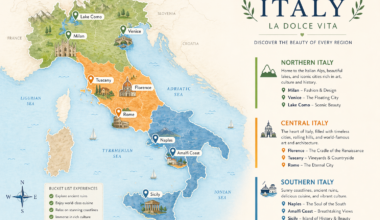
Italy has more incredible destinations than any single trip can cover, so choosing well is critical. Here’s my honest breakdown of the major cities and who they suit:
| City | Best For | Must-See | Days Needed |
| Rome | History, culture, food — everyone | Colosseum, Vatican, Trastevere | 3–4 days |
| Florence | Art lovers, couples, first-timers | Uffizi Gallery, Duomo, Ponte Vecchio | 2–3 days |
| Venice | Romance, architecture, unique experience | Grand Canal, St Mark’s Basilica, Rialto | 1–2 days |
| Milan | Fashion, design, business travellers | Duomo, Last Supper, Brera | 1–2 days |
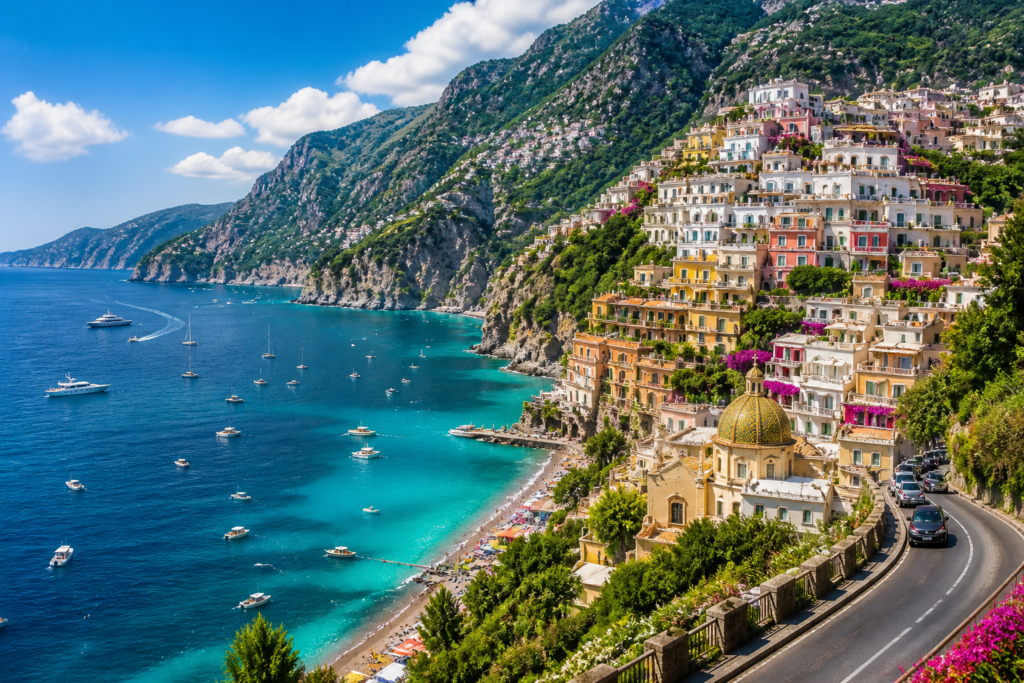
| Amalfi Coast | Nature lovers, couples, luxury seekers | Positano, Ravello, boat trips | 2–3 days |
| Cinque Terre | Hikers, photographers, budget travellers | Five coastal villages, hiking trails | 1–2 days |
| Sicily | Culture, food, adventure seekers | Palermo, Mount Etna, Valley of Temples | 3–5 days |
Want a deeper look at which Italian destinations suit your travel style? Check out my guide to the best places to visit in Italy — it covers every region in detail.
Step 4 – Plan Your Itinerary
Here’s a rule I always follow: build your itinerary around geography, not just wishlist. The biggest mistake travellers make is booking cities they want to see without checking how they connect — leading to exhausting backtracking and wasted travel days.
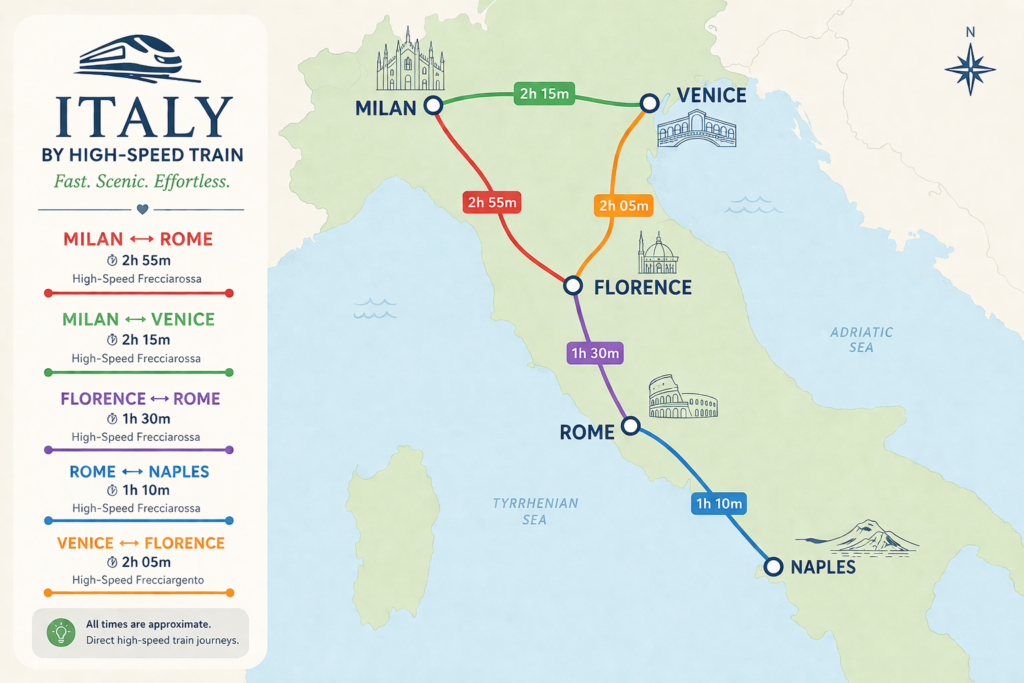
The golden rule for Italy: travel in a logical loop or linear route. The classic triangle works because it flows naturally:
- Rome (south/central) → Florence (central/north) → Venice (north)
- Each leg is 1.5–2.5 hours by high-speed train
- No backtracking, no wasted days
If you want to add more cities, extend the route rather than inserting stops awkwardly:
- Add Naples/Amalfi Coast after Rome (south extension)
- Add Cinque Terre between Florence and Venice (coastal detour)
- Add Milan at the end before flying home from MXP airport
Planning a broader European trip alongside Italy? My guide on how to plan a trip to Europe covers multi-country logistics in detail.
Step 5 – Book Flights & Hotels
When it comes to flights, the earlier you book, the better — but ‘early’ means different things depending on your origin:
- From the UK/Europe: Book 6–10 weeks ahead for budget airlines (Ryanair, easyJet, Wizz Air)
- From the US: Book 3–4 months ahead for transatlantic routes (Rome FCO and Milan MXP are main hubs)
- Use Google Flights ‘date grid’ to find cheapest departure windows
For hotels, I recommend booking accommodation in this order: Venice first (most limited, fills fastest), then Rome, then Florence. Use Booking.com or Hotels.com for mid-range; Hostelworld for budget.
| Pro Tip Book hotels with free cancellation until 2–3 weeks before travel. This gives you flexibility if plans change while still securing your preferred dates. |
Step 6 – Plan Transportation Within Italy
Getting between Italian cities is one of the most enjoyable parts of the trip — if you plan it right. Here’s how I approach it:
| Route | Best Option | Journey Time | Approx. Cost |
| Rome → Florence | Trenitalia Frecciarossa (high-speed) | 1h 30m | €25–€60 |
| Florence → Venice | Trenitalia Frecciarossa | 2h 10m | €25–€65 |
| Rome → Naples | Trenitalia Frecciargento | 1h 10m | €20–€45 |
| Milan → Venice | Trenitalia/Italo | 2h 30m | €20–€55 |
| Naples → Amalfi Coast | SITA Bus or ferry | 1h–1h 30m | €3–€15 |
| Florence → Cinque Terre | Regional train via La Spezia | 2h 30m | €15–€25 |
Book trains via Trenitalia (trenitalia.com) or Italo (italotreno.it). Book at least 2–3 weeks ahead for high-speed trains — prices rise significantly close to departure.
Renting a car in Italy is only worth it for exploring rural Tuscany or the Amalfi hillside villages. In cities, cars are a liability — ZTL restricted zones and extreme parking costs make driving a headache.
Step 7 – Book Activities in Advance
This is the single most important logistical move you can make. Skip-the-line tickets and advance bookings can save you 2–4 hours of queuing at Italy’s top attractions.
These are non-negotiable advance bookings in my experience:
- Colosseum & Roman Forum (Rome) — book 2–4 weeks ahead
- Vatican Museums & Sistine Chapel — book 3–6 weeks ahead
- Uffizi Gallery (Florence) — book 2–3 weeks ahead
- Last Supper by Leonardo da Vinci (Milan) — book 2–3 months ahead
- Doge’s Palace (Venice) — book 1–2 weeks ahead
First time planning a visit specifically to Rome? I’ve put together a dedicated guide on the best places to visit in Italy for the first time that covers exactly what to prioritise.
| Key Takeaways – Step-by-Step Planning • Travel in spring (April–May) or autumn (Sept–Oct) for best experience • Budget €80–€150/day for a comfortable mid-range trip • Follow a logical geographic route — no backtracking • Book trains and attractions 2–6 weeks ahead • Prioritise advance tickets for Vatican, Colosseum, Uffizi |
How to Plan a Trip to Italy on a Budget
Italy has a well-earned reputation for being expensive — but from my experience, it’s entirely possible to have an extraordinary trip without spending a fortune. Here’s what actually works:
Cheapest Time to Travel
- November to March (excluding Christmas week) — hotel prices drop 30–50%
- Shoulder season: October and April — good weather + lower prices than summer
- Avoid: July, August, Christmas, Easter — peak prices across the board
Budget Accommodation Tips
- Hostels with private rooms: €40–€70/night in Rome and Florence
- Airbnb apartments: great for 5+ nights, especially Florence and Bologna
- Agriturismos (farm stays): budget-friendly and unique in rural Tuscany
- Stay slightly outside the centre — prices drop dramatically 1–2 metro stops out
Saving on Transport and Food
- Buy a Trenitalia rail pass if doing 3+ intercity journeys
- Eat where locals eat: look for ‘menù del giorno’ (lunch specials) — full meal for €10–€14
- Avoid restaurants directly on major tourist piazzas — markups are 40–60% higher
- Carry a reusable water bottle — Italian tap water is clean and free
- Free attractions: Pantheon (now requires €5 ticket, but was free), Trevi Fountain, Spanish Steps, Campo de’ Fiori
| Budget Target A serious budget traveller can do Italy on €65–€85/day (accommodation + food + transport + 1 paid attraction). For 10 days, that’s €650–€850 excluding flights. |
How to Plan a Multi-City Trip to Italy
Planning a multi-city Italy trip is where most people overthink things. The key principle is simple: flow geographically and avoid backtracking.
Logical Route Planning
Here are the most efficient multi-city routes based on geography:
| Route | Cities | Total Days | Best For |
| Classic Triangle | Rome → Florence → Venice | 10–12 days | First-timers, all budgets |
| Southern Focus | Rome → Naples → Amalfi → Sicily | 12–14 days | Food lovers, beach seekers |
| Northern Italy | Milan → Lake Como → Venice → Verona | 8–10 days | Design lovers, couples |
| Grand Tour | Rome → Florence → Cinque Terre → Venice → Milan | 14–18 days | Return visitors, longer stays |
| Italy + France | Rome → Florence → Nice → Paris | 12–16 days | Multi-country travellers |
Sample Route: Rome → Florence → Venice
- Day 1–4: Rome — Vatican, Colosseum, Trastevere, Borghese Gallery
- Day 5–7: Florence — Uffizi, Duomo, day trip to Siena or Tuscany
- Day 8–9: Cinque Terre — hike or relax between coastal villages (optional stop)
- Day 10–12: Venice — Grand Canal, Doge’s Palace, island hop to Murano/Burano
What I’ve seen work especially well: book your outbound flight from a different city than where you land. Fly into Rome, fly out of Venice (or Milan). This eliminates the need to double back and often opens up cheaper flight options.
How to Plan a 10-Day Trip to Italy
Ten days is the sweet spot for a first Italy trip. It’s long enough to cover the highlights without rushing, short enough to stay energised. Here’s my recommended 10-day breakdown:
| Days | Location | Key Activities |
| Day 1–2 | Rome | Arrive, Vatican City, Castel Sant’Angelo |
| Day 3–4 | Rome | Colosseum, Roman Forum, Palatine Hill, Trastevere evening |
| Day 5 | Rome → Florence | Morning train, afternoon walk: Ponte Vecchio, Oltrarno |
| Day 6 | Florence | Uffizi Gallery, Duomo climb, Piazzale Michelangelo sunset |
| Day 7 | Florence | Day trip to Siena or San Gimignano, local Tuscan lunch |
| Day 8 | Florence → Venice | High-speed train, afternoon gondola or vaporetto ride |
| Day 9 | Venice | Doge’s Palace, St Mark’s Basilica, Rialto Market, Burano island |
| Day 10 | Venice → Depart | Morning canal walk, afternoon flight home |
This itinerary has zero wasted travel days. Every morning train connects to an afternoon of sightseeing. If you want more breathing room, extend to 12 days and add a night in Cinque Terre between Florence and Venice.
How to Plan a 2-Week Trip to Italy
With two weeks (14 days), you can explore Italy with genuine depth rather than just ticking boxes. This is the trip I genuinely recommend for anyone visiting Italy for the first time with enough holiday allowance.
| Days | Location | Highlights |
| Day 1–3 | Rome | Vatican, Colosseum, Roman Forum, Borghese Gallery |
| Day 4 | Day trip: Pompeii or Orvieto | Ruins, history, a different pace |
| Day 5–6 | Naples + Amalfi Coast | Pizza Napoletana, Positano, coastal views |
| Day 7–8 | Florence | Uffizi, Duomo, evening aperitivo culture |
| Day 9 | Day trip: Tuscany | Chianti vineyards, Siena or San Gimignano |
| Day 10 | Cinque Terre | Hike the coastal trail, seafood dinner |
| Day 11–12 | Venice | Grand Canal, Doge’s Palace, Murano glass-blowing |
| Day 13–14 | Milan or Lake Como | Last Supper, fashion district, or lakeside relaxation |
The Amalfi Coast leg is what elevates this itinerary from ‘standard’ to extraordinary. Most first-timers skip it because it requires a short detour south — but it’s consistently the highlight of those who make the effort.
How to Plan a Solo Trip to Italy
I’ve planned solo Italy trips and helped others do the same — and I’ll tell you honestly: Italy is one of the best solo travel destinations in the world. Italians are warm and expressive, the country has outstanding public transport, and there’s no shortage of fellow travellers to meet at hostels and tours.
Safety Tips for Solo Travel in Italy
- Italy is generally very safe for solo travellers — violent crime targeting tourists is rare
- Watch for pickpockets in Rome (especially near the Colosseum and Trevi Fountain) and Venice (Rialto area)
- Keep your passport and backup cash separate from your main wallet
- Use official taxis (white, metered) — avoid unlicensed drivers who approach you at airports
- Trust your gut in unfamiliar areas — stick to well-lit streets at night
Best Cities for Solo Travel
- Bologna: underrated, lively university city, incredible food scene, very affordable
- Rome: overwhelming alone at first, but deeply rewarding — book a free walking tour on day 1
- Florence: compact, walkable, full of solo-friendly art and food experiences
- Palermo (Sicily): raw, authentic, culturally rich — excellent for adventurous solo travellers
Solo travel in Europe goes beyond Italy — my guide on solo travel Europe destinations has expanded ideas for building a broader solo adventure.
| Pro Tip for Solo Travellers Book a day tour in Rome and Florence for day 1 or 2. Walking tours (many are free/tip-based) instantly give you context, community, and confidence in a new city. I’ve seen solo travellers form lasting travel friendships on these tours. |
How to Plan a Family Trip to Italy
Travelling Italy with kids requires a different mindset. The goal shifts from ‘see everything’ to ‘have a genuinely good time’ — and that usually means slowing down. From my experience, the families who enjoy Italy most are the ones who accept they’ll cover less ground and invest more time in each place.
Kid-Friendly Locations
- Rome: Gladiator experience at the Colosseum, gelato trails, large open spaces like the Villa Borghese park
- Tuscany: Farm stays (agriturismo), cooking classes, wide open landscapes
- Lake Garda: Beach activities, Gardaland theme park, castle visits — a hidden gem for families
- Venice: The novelty of water transport thrills kids — gondola rides, ferries, boat taxis
- Pompeii: Surprisingly engaging for children — the ruins tell a vivid story
Travel Pacing for Families
- Limit yourself to 2–3 cities maximum — city-hopping exhausts young children
- Stay minimum 3 nights per city to let kids settle in
- Build in afternoon downtime every day — gelato breaks count as culture
- Book accommodation with a kitchen or apartment to make mealtimes flexible
- Avoid visiting in July–August with young kids — heat and crowds are brutal
For inspiration beyond Italy, take a look at my guide on the best family vacation destinations in Europe — it puts Italy in the broader family travel context.
How to Combine Italy with France or Spain
Italy pairs beautifully with its neighbours — particularly France and Spain. Here’s how I approach combination trips:
Italy + Paris Route
This is the most popular combination for European first-timers. The logical routing:
- Fly into Rome, spend 4–5 days in Italy (Rome + Florence)
- Take the overnight train or cheap flight to Paris (2h by plane from Florence/Milan)
- Spend 3–4 days in Paris covering the classics: Eiffel Tower, Louvre, Montmartre
- Fly home from Paris CDG
Planning the French leg of your trip? My guide on the best places to visit in France covers everything from Paris to Provence.
Italy + Spain Route
Italy and Spain don’t share a border, so this combination works best as a fly-in/fly-out trip:
- Fly into Barcelona or Madrid, spend 4–5 days in Spain
- Take a cheap flight (Vueling, Iberia) to Rome or Venice
- Spend 5–7 days in Italy
- Fly home from Venice or Milan
What I’ve seen work well: book a ‘multi-city’ flight ticket (Barcelona in / Venice out) for the whole trip. This is often cheaper than two separate round trips and eliminates doubling back.
City Planning Guides
How to Plan a Trip to Rome, Italy
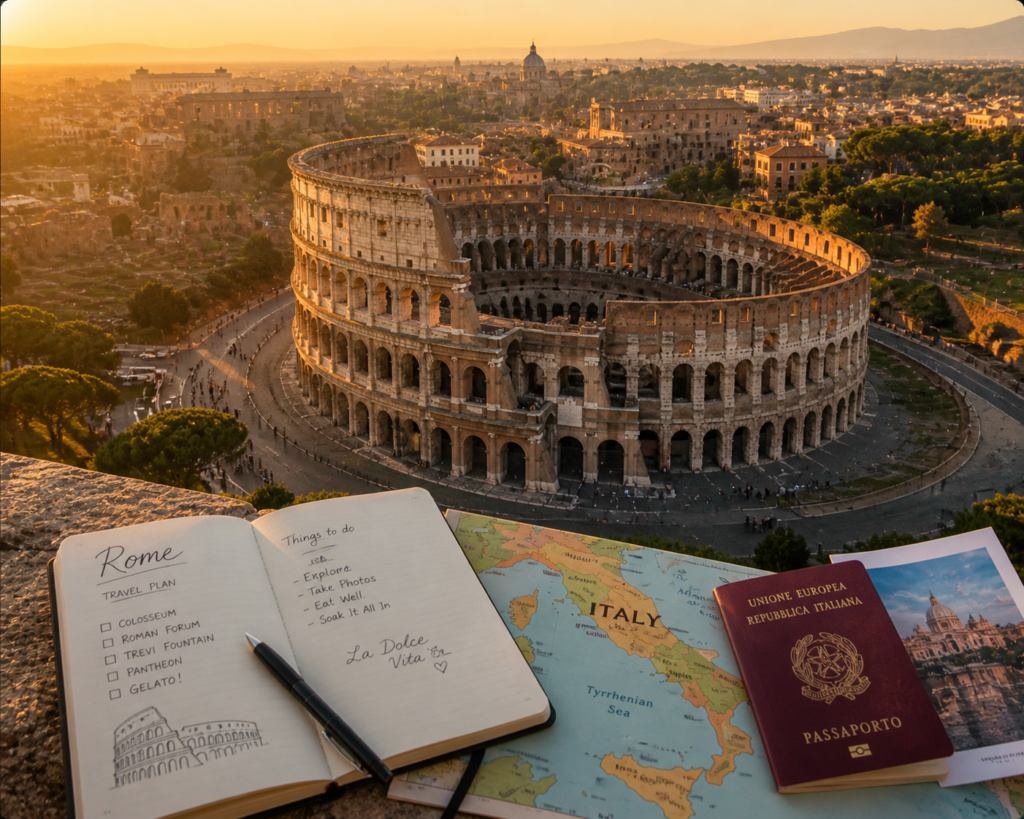
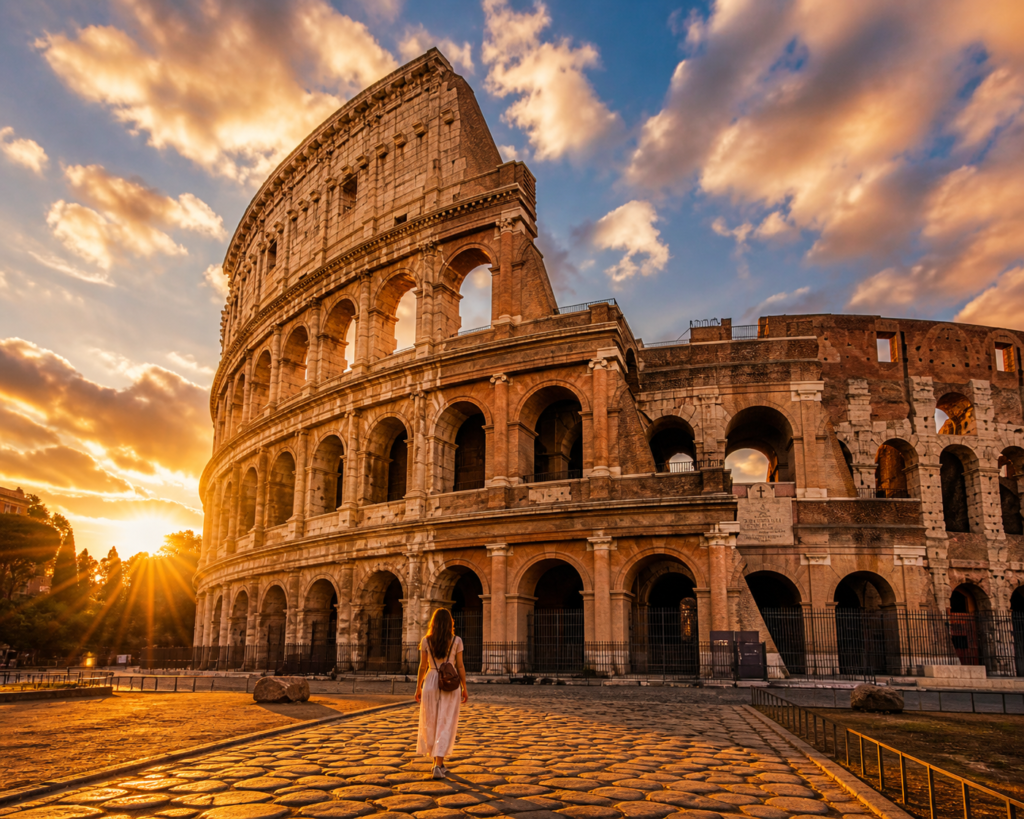
Rome is the beating heart of any Italy trip. It’s overwhelming in the best possible way — layers of history stacked on top of each other across 28 centuries. Here’s my framework for planning Rome:
- Spend at least 3 full days — 2 is never enough
- Day 1: Ancient Rome — Colosseum, Roman Forum, Palatine Hill (book all in one ticket, book ahead)
- Day 2: Vatican — Vatican Museums, Sistine Chapel, St Peter’s Basilica and Square (book 4–6 weeks ahead for timed entry)
- Day 3: Neighbourhoods and lifestyle — Trastevere, Campo de’ Fiori, Piazza Navona, Pantheon
- Stay in Trastevere, Prati, or Pigneto neighbourhoods for local atmosphere without tourist markup
- Get a Roma Pass for unlimited public transport + museum discounts if staying 3+ days
Going to Rome? Don’t miss my detailed guide on the best places to visit in Italy for the first time — it covers Rome extensively alongside other first-timer priorities.
How to Plan a Trip to Venice, Italy
Venice is unlike anywhere else on earth — and planning it correctly makes all the difference between a magical experience and a frustrating one.
- Stay in Venice proper (not Mestre on the mainland) — the evening atmosphere after day-trippers leave is extraordinary
- 1.5–2 days is usually enough unless you plan island-hopping to Murano, Burano, and Torcello
- Book a vaporetto (water bus) day pass — cheapest way to navigate the canals
- Visit St Mark’s Basilica early morning (8:30 am) — free entry, no queue
- Skip the overpriced gondola on the Grand Canal — take the traghetto (€2 standing gondola crossing) instead
- Carnival season (February) is magical but prices triple — book 6+ months ahead if visiting then
Beginner vs Advanced Italy Travel Strategy
| Factor | Beginner Strategy | Advanced Strategy |
| Cities | Rome, Florence, Venice (classic triangle) | Add Puglia, Bologna, Sicily, Sardinia |
| Itinerary Style | Fixed, pre-planned schedule | Flexible with 30–40% open time |
| Accommodation | Hotels with breakfast included | Mix of B&Bs, farm stays, apartments |
| Attractions | Guided tours for context | Self-exploration with audio guides |
| Transport | High-speed trains between cities | Rental car for rural/regional exploration |
| Food Strategy | Trip Advisor top-rated restaurants | Ask locals, walk away from piazzas |
| Booking Timeline | 3–4 months ahead | 6–8 weeks ahead (flexible bookings) |
Most first-timers try to plan like advanced travellers — keeping things flexible, avoiding ‘tourist’ spots. What I’ve seen is that this backfires: without context and pre-booking, first-timers waste time queuing, overpay, and miss the highlights that matter most. Start structured; go flexible on your second visit.
Essential Tools & Resources for Planning
| Category | Tool / Platform | What It’s Best For |
| Flights | Google Flights | Price calendars, multi-city comparison |
| Flights | Skyscanner | Finding cheapest months to fly |
| Hotels | Booking.com | Mid-range hotels with free cancellation |
| Budget Stays | Hostelworld | Hostels and budget private rooms |
| Apartments | Airbnb | Self-catering, longer stays |
| Trains | Trenitalia / Italo | Book Italian high-speed trains directly |
| Attractions | GetYourGuide / Viator | Skip-the-line tickets and tours |
| Navigation | Google Maps offline | Works without data — download city maps |
| Itinerary | Wanderlog / TripIt | Organise bookings and day plans |
| Translation | Google Translate (camera) | Read menus and signs instantly |
| Pro Tip Download Google Maps offline maps for Rome, Florence, and Venice before you fly. Italian SIM cards and tourist Wi-Fi can be unreliable — offline maps have saved my planning more than once. |
Common Mistakes to Avoid When Planning an Italy Trip
| ❌ Common Mistakes • Overpacking the itinerary — Italy rewards slowness, not efficiency • Ignoring travel time — trains take time; buffer 2–3 hours on travel days • Booking too late — Colosseum and Vatican sell out weeks ahead • Visiting peak season (July–August) without advance planning • Eating directly on major tourist piazzas — food quality drops, prices spike • Forgetting city tax — add €2–€7/night per person to your accommodation budget • Renting a car in cities — ZTL zones will generate automatic fines • Skipping the smaller towns — day trips to Siena, Orvieto, or Matera are often trip highlights |
Italy Trip Planning Checklist
Use this checklist to make sure nothing slips through:
| Timeline | Task | Status |
| 3–4 months before | Book international flights | ☐ |
| 3–4 months before | Book Vatican Museums tickets | ☐ |
| 2–3 months before | Book hotels/accommodation | ☐ |
| 2–3 months before | Book Last Supper (if visiting Milan) | ☐ |
| 6–8 weeks before | Book Colosseum & Roman Forum | ☐ |
| 6–8 weeks before | Book Uffizi Gallery Florence | ☐ |
| 4–6 weeks before | Book intercity trains (Trenitalia/Italo) | ☐ |
| 4–6 weeks before | Arrange travel insurance | ☐ |
| 2–3 weeks before | Download offline maps (Google Maps) | ☐ |
| 2–3 weeks before | Notify bank of travel dates | ☐ |
| 1 week before | Print / screenshot all booking confirmations | ☐ |
| Day before | Check train times and any travel disruptions | ☐ |
FAQs – How to Plan a Trip to Italy
How much does an Italy trip cost?
Budget travellers can manage Italy on €65–€90/day (excluding international flights). Mid-range travellers should expect €130–€200/day. A 10-day trip including flights from Europe typically costs €1,200–€2,500 total per person depending on your choices.
How many days are enough for Italy?
10 days is ideal for a first trip covering Rome, Florence, and Venice. 7 days works if you limit yourself to two cities. 14 days allows you to add the Amalfi Coast, Cinque Terre, or Sicily. Anything under 5 days will feel rushed.
Is Italy expensive to travel?
Italy has a wide price range. Tourist-facing restaurants and central hotels are expensive. But markets, local trattorias, regional transport, and free sights make it genuinely affordable if you plan smart. The key is knowing where the tourist markup exists — and avoiding it.
Can I travel Italy without a tour?
Absolutely — and I actually recommend it for most travellers. Italy’s public transport is excellent, signage is clear, and the country is deeply used to independent tourists. Use skip-the-line tickets instead of group tours for attractions, and you’ll have a more flexible, personal experience.
What’s the best city to start an Italy trip?
Rome is the best starting point for most itineraries. It has the best international flight connections, is centrally located for onward travel, and delivers the most concentrated ‘wow’ factor for first arrivals. Flying into Milan is a good alternative if your itinerary focuses on northern Italy.
Final Action Plan – Your Next Steps
You now have everything you need to plan an incredible Italy trip. Here’s how to turn this guide into action based on your situation:
| If You’re a First-Timer: 1. Choose the classic 10-day Rome → Florence → Venice route 2. Book flights 3–4 months ahead (aim for April or September departure) 3. Book Vatican Museums and Colosseum tickets immediately after flights 4. Book high-speed trains 4–6 weeks before travel 5. Download this guide’s checklist and work through it top to bottom |
| If You’re on a Budget: 1. Target October or April — shoulder season with best value 2. Book budget flights (Ryanair/easyJet from Europe) 6–8 weeks ahead 3. Use hostels with private rooms or Airbnb apartments 4. Eat at local trattorias — look for ‘menù del giorno’ lunch specials 5. Prioritise 1–2 paid attractions per city; use free sights for the rest |
| If You Want a Premium Experience: 1. Book a boutique hotel in each city — Florence’s Oltrarno neighbourhood is exceptional 2. Add private guided tours for Vatican and Uffizi — worth every euro 3. Include Amalfi Coast for 2–3 nights — the single best upgrade to any Italy itinerary 4. Book the Last Supper (Milan) 2–3 months in advance — genuinely unmissable 5. Consider a private transfer from Rome to Amalfi — saves the logistics stress |
Ready to start exploring? Begin with my guide on the best places to visit in Italy to lock in your city selection — then come back and build your itinerary from Step 1.
Italy rewards the traveller who plans intelligently and travels slowly. You don’t need to see everything. You need to see the right things, in the right order, at the right pace. That’s what this guide is built to help you do.
Buon viaggio — have an incredible trip.
Related Guides You Might Find Useful