✅ Why You Can Trust This Guide
I’ve spent years traveling across Europe, Southeast Asia, and South America — sometimes staying in one city for months at a time. I’ve done the rushed 12-country Euro trip and I’ve done month-long stays in a single Lisbon neighborhood. I know exactly which one produces better stories, better memories, and a lower credit card bill. This guide is built on real experience, honest comparisons, and practical frameworks — not recycled advice from travel blogs.
The modern traveler is exhausted.
Packed itineraries, airport stress, overcrowded attractions, and rushed vacations are making travel feel more like a second job than a genuine escape. You come home needing a vacation from your vacation — and you’re not alone in feeling that way.
That’s exactly why slow travel is becoming one of the biggest travel trends in 2026. More people are waking up to a simple truth: seeing fewer places deeply beats racing through dozens of destinations with a camera and a checklist.
From my experience, slow travel isn’t just a travel style — it’s a mindset shift that changes how you experience the world. And in this guide, I’m going to show you exactly what it means, why it works, and how to start doing it yourself.
📌 Quick Summary — What You’ll Learn in This Guide
- What slow travel actually means (and what it doesn’t)
- Why it’s growing globally in 2026
- How to start slow traveling — a beginner framework
- Best destinations for slow travel this year
- Common beginner mistakes to avoid
- How retirees are embracing slow travel as a lifestyle
What Slow Travel Actually Means in 2026
The Real Meaning Behind Slow Travel
Slow travel is the practice of spending extended time in fewer destinations rather than rushing through many. Instead of visiting 10 cities in 14 days, you might spend two full weeks in one city — or even one neighborhood.
The term entered mainstream travel culture around 2010, but its roots go much deeper — borrowing from the Slow Food movement and the broader “slow living” philosophy that emerged in Italy in the 1980s. In 2026, slow travel has evolved beyond a niche traveler quirk. It’s now a deliberate lifestyle choice for millions.
From my experience, the most important thing to understand about slow travel meaning is this: it’s not about pace for its own sake. It’s about presence over productivity, depth over quantity, and connection over consumption.
Why Slow Travel Is More Than Just Traveling Slowly
A common misconception I hear constantly is that slow travel just means “taking it easy” or “not rushing.” That’s only part of it.
What slow travel is really about:
- Choosing to live in a place temporarily, not just visit it
- Building routines — a regular café, a morning market, a local gym
- Connecting with locals in a way that goes beyond tourist interactions
- Understanding culture from the inside rather than viewing it from a tour bus
What slow travel is NOT:
- Sitting still and doing nothing
- Avoiding attractions entirely
- Only for people with unlimited budgets or no jobs
💡 Pro Tip: Slow travel works for weeklong trips too. Even spending 7 full days in one city instead of splitting it across three qualifies as a slow travel approach — and you’ll be shocked how much richer the experience feels.
How Slow Travel Changed Modern Tourism
The tourism industry is changing fast. Airbnb, Nomad Visa programs, and the global shift to remote work have made it easier than ever to stay somewhere for a month without it being called “immigration.”
Countries like Portugal, Georgia, and Mexico have actively created digital nomad and slow traveler visa programs because they understand the economic benefit: a slow traveler who stays 30 days spends far more locally than 10 tourists who stay 3 days each.
What I’ve seen firsthand is that the destinations most loved by experienced travelers are almost always the ones that reward longer stays — Chiang Mai, Lisbon, Medellín, Bologna. These cities have infrastructure built for people who actually live there, not just pass through.
The Difference Between Tourism and Immersive Travel
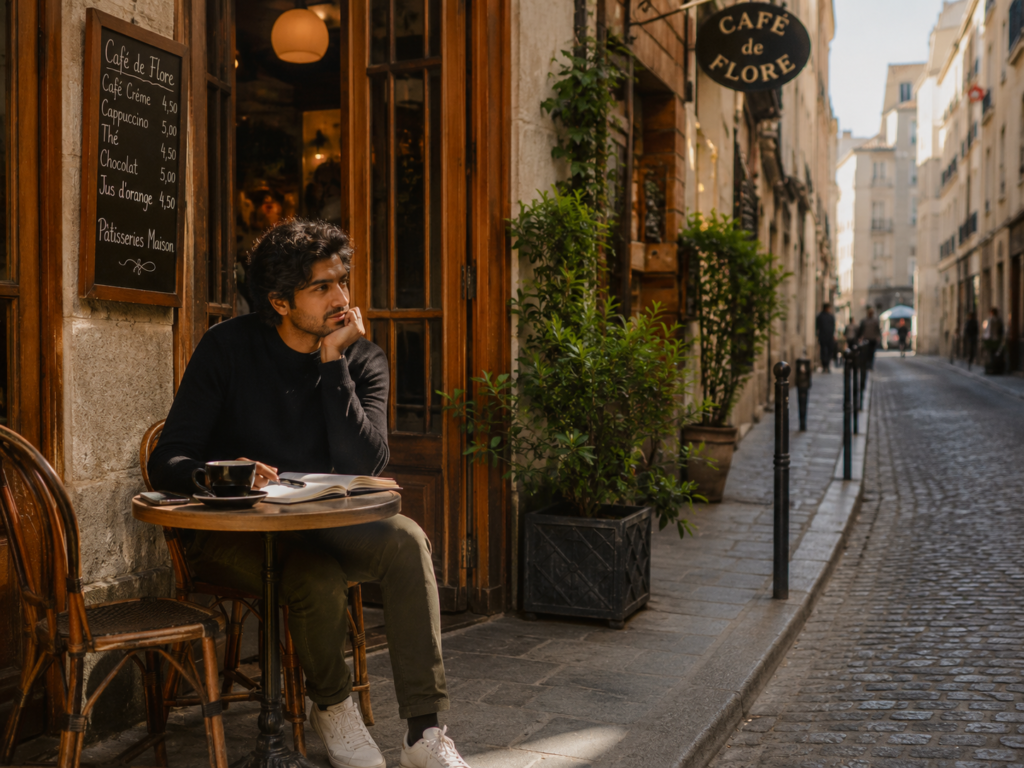
Tourism is transactional. You pay, you see, you leave. Immersive slow travel is relational — you arrive, you settle, you belong (even temporarily).
The difference shows up in small things: knowing which bakery opens earliest, having a regular table at a local restaurant, or being greeted by name at the corner market after just one week. These moments don’t happen in a 2-day visit — they’re the exclusive reward of the slow traveler.
Why Travelers Are Moving Away From Fast-Paced Tourism
The Burnout Problem Most Travelers Ignore
Here’s what actually happens on most traditional “big” trips: you spend 8 months planning, 2 weeks half-awake from jet lag and travel stress, and 3 months wishing you could go back and do it differently.
Travel burnout is real, and it’s more common than the Instagram highlight reel suggests. From my experience talking to hundreds of travelers, the biggest complaint is always the same: “I was so tired by day 5 that I stopped enjoying it.”
Slow travel solves this by removing the artificial pressure to maximize every hour.
Why “Seeing Everything” Often Ruins Trips
Most people fail because they confuse quantity with quality in travel. Visiting 14 countries in 3 weeks sounds impressive — until you realize you can’t remember what country that beautiful square was in.
I tested both approaches. A 10-day sprint through 6 cities left me with hundreds of photos I barely look at. A 10-day stay in a single Greek island gave me friendships, favorite meals, and a mental map of every lane in town.
The memories that last aren’t the landmarks. They’re the unexpected moments — and those only happen when you slow down.
Social Media Travel vs Real Travel Experiences
Social media has manufactured a version of travel where the goal is proof — proof you were there, proof you climbed it, proof you ate it. The problem is that this performance of travel has almost nothing to do with actually experiencing a place.
The slow traveler mindset is the antidote. When you’re staying somewhere for 3 weeks, you stop hunting for Instagrammable moments and start living in them naturally.
What Travelers Secretly Want More Of
When I ask travelers what they actually wish their trips had included more of, the answers are consistent:
- More time to explore without a schedule
- Fewer hotel check-ins and check-outs
- Real conversations with locals
- Time to actually eat (not just photograph) local food
- Days with absolutely nothing planned
Slow travel delivers all five.
The Biggest Benefits of Slow Travel
📖 Case Study: From Rushed Backpacker to Slow Traveler
Marcus, a 34-year-old software developer from Canada, spent his first European trip visiting 9 countries in 18 days. He came home exhausted and vaguely disappointed. The following year, he booked an apartment in Porto, Portugal for 5 weeks. Total cost: lower than his previous trip. Outcome: he learned basic Portuguese, discovered his favorite restaurant (a 6-table spot with no English menu), joined a local hiking group, and returned the next year with his partner. “I finally understood what travel was supposed to feel like,” he told me.
Building Deeper Cultural Connections
When you stay somewhere long enough, culture stops being a museum exhibit and starts being your daily life. You shop at the same market stalls, you recognize the neighbor walking his dog, you learn what the locals actually eat for breakfast — not what they serve tourists.
From my experience, the cultural connections made during slow travel are qualitatively different from anything you get on a standard tour. They’re real, reciprocal relationships — not transactions.
Reducing Stress While Traveling
Slow travel removes the constant logistical anxiety of traditional travel: no checking if your next train is on time, no packing every 48 hours, no racing between airports. When you have a home base for 2–4 weeks, travel stress drops dramatically.
You wake up and the city is already there waiting for you. That simple shift changes everything about how you feel by day 3.
Why Slow Travel Often Costs Less
This surprises most people, but it’s one of the most consistent truths of slow traveling: longer stays almost always cost less per day than short ones.
- Monthly apartment rentals: 40–60% cheaper per night than hotels
- Cooking your own meals saves hundreds per week
- No constant flight costs between cities
- Local markets and neighborhood shops replace tourist-priced restaurants
- You learn where locals go — and locals go to cheaper places
💡 Pro Tip: Use Airbnb monthly discount filters, Booking.com long-stay rates, or local Facebook expat groups to find monthly rentals at 50–70% below nightly rates. The longer you commit, the better the deal.
Better Food, Better Conversations, Better Memories
Here’s what actually works when it comes to food travel: regularity. Going to the same local restaurant three times in two weeks turns a transaction into a relationship. The owner starts suggesting dishes you haven’t tried. You discover the off-menu specials. That’s the slow travel difference.
And memories? Neuroscience backs this up. Novel experiences are encoded more deeply when they happen in a context we return to repeatedly. Slow travelers don’t just collect experiences — they consolidate them.
Sustainability and Responsible Tourism
Slow travel is one of the most environmentally responsible ways to explore the world. Fewer flights mean a dramatically lower carbon footprint. Spending money in local businesses — rather than international hotel chains — ensures tourism dollars actually benefit host communities.
If sustainable travel matters to you, slow travel is the most effective form of responsible tourism you can practice.
🎯 Key Takeaways: Benefits of Slow Travel
- Costs 30–50% less per day than traditional tourism
- Dramatically reduces travel stress and burnout
- Creates deeper cultural connections and lasting memories
- Better for the environment — fewer flights, more local spending
- Food and social experiences become genuinely memorable
Slow Travel vs Traditional Travel
Fast Tourism vs Slow Exploration
Let’s get concrete. Here’s a direct side-by-side comparison of what each travel style actually looks like in practice:
| Feature | Slow Travel | Traditional Travel |
| Duration per place | 1–4 weeks+ | 1–3 days |
| Cost (monthly) | Often 30–50% less | Higher due to daily hotels & flights |
| Cultural immersion | Deep and authentic | Surface-level |
| Stress level | Low to moderate | High (rushing) |
| Best for | Meaningful experience | Checking off landmarks |
| Accommodation | Rentals, long-stay hostels | Hotels, short-term bookings |
| Food experience | Local markets, home cooking | Tourist restaurants |
| Flexibility | High | Low (pre-booked) |
| Sustainability | Eco-friendly, low carbon | High carbon footprint |
| Memory quality | Rich, lasting | Often blurred together |
Which Travel Style Saves More Money
The numbers consistently favor slow travel for trips longer than 10 days. The savings compound quickly when you factor in: no daily hotel checkout fees, no inter-city transport costs, grocery shopping instead of eating every meal out, and weekly/monthly rental discounts that can halve your accommodation costs.
A traditional 2-week European trip — with hotels, daily activities, and restaurant meals — can run $4,000–$7,000+ per person. The same two weeks in a rented apartment in a mid-tier European city, cooking some meals and using local transit? Closer to $1,500–$2,500 total, including flights.
Which Approach Creates Better Experiences
This depends on what you mean by “better.” If your goal is ticking off landmarks, traditional travel is efficient. If your goal is genuinely understanding a place and coming home feeling enriched rather than depleted, slow travel wins every time.
What I’ve seen over years of travel: the people who are most satisfied with their experiences are the ones who went deep, not wide.
When Traditional Travel Still Makes Sense
I’ll be honest — traditional fast-paced travel has its place. If you have 5 days and want to see highlights of multiple cities, a tight itinerary makes sense. If you’re attending a specific event. If it’s a first visit to a country and you want to survey the options before committing.
But if you have more than 10 days and the choice is yours to make — slow down.
How to Start Slow Traveling (Beginner Framework)
The best slow travel guide doesn’t give you rules — it gives you principles. Here’s the beginner framework I recommend to anyone making the switch from traditional to slow travel:
Choose Fewer Destinations
The single most important decision in slow travel planning is also the hardest: cutting destinations from your list. Most beginners plan 5 stops and should plan 2. Commit to this principle early, because itinerary creep is the #1 enemy of the slow traveler.
A good rule: for every week of travel, plan one primary destination and one optional secondary stop.
Stay Longer in One Place
The slow travel sweet spot is a minimum of 7 days per destination, with 2–4 weeks being ideal for first-timers. Here’s why 7+ days transforms the experience:
- Days 1–2: Orientation and getting over travel fatigue
- Days 3–5: You start to find your rhythm and favorite spots
- Days 6–14: You feel like you actually live there — this is where the magic happens
Travel Like a Local Instead of a Tourist
This is easier said than done, but the practical steps are simple:
- Shop at local markets, not supermarkets near tourist zones
- Eat where there’s no English menu outside
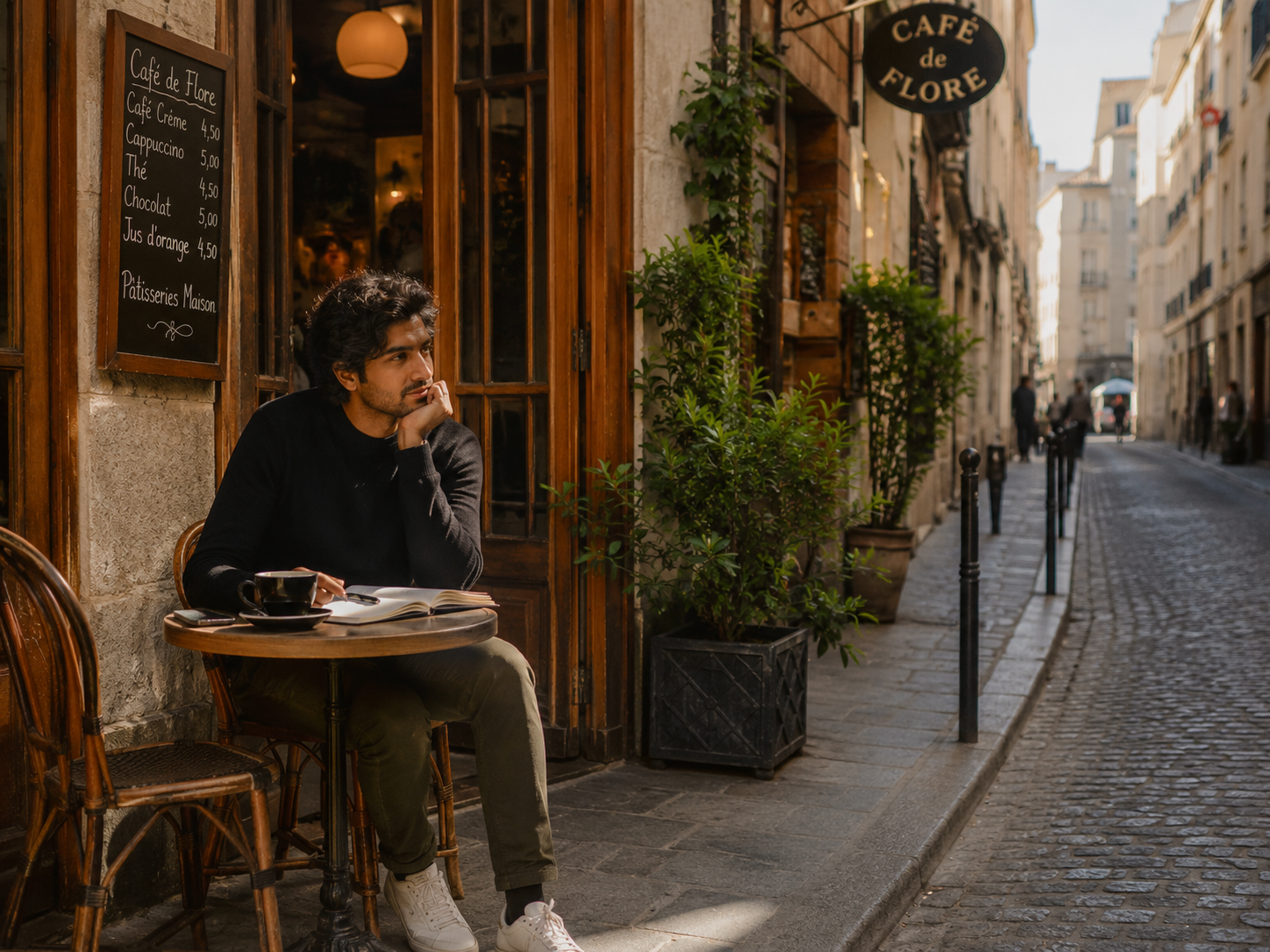
- Use the same café or breakfast spot multiple days in a row
- Walk or use public transit — avoid tourist shuttles
- Follow local social media accounts and community boards
Use Local Transportation
Local buses, metro systems, and trams don’t just save money — they immerse you in daily life. Some of my best conversations and most memorable travel moments have happened on local buses, not in tour vans.
Build Flexible Itineraries
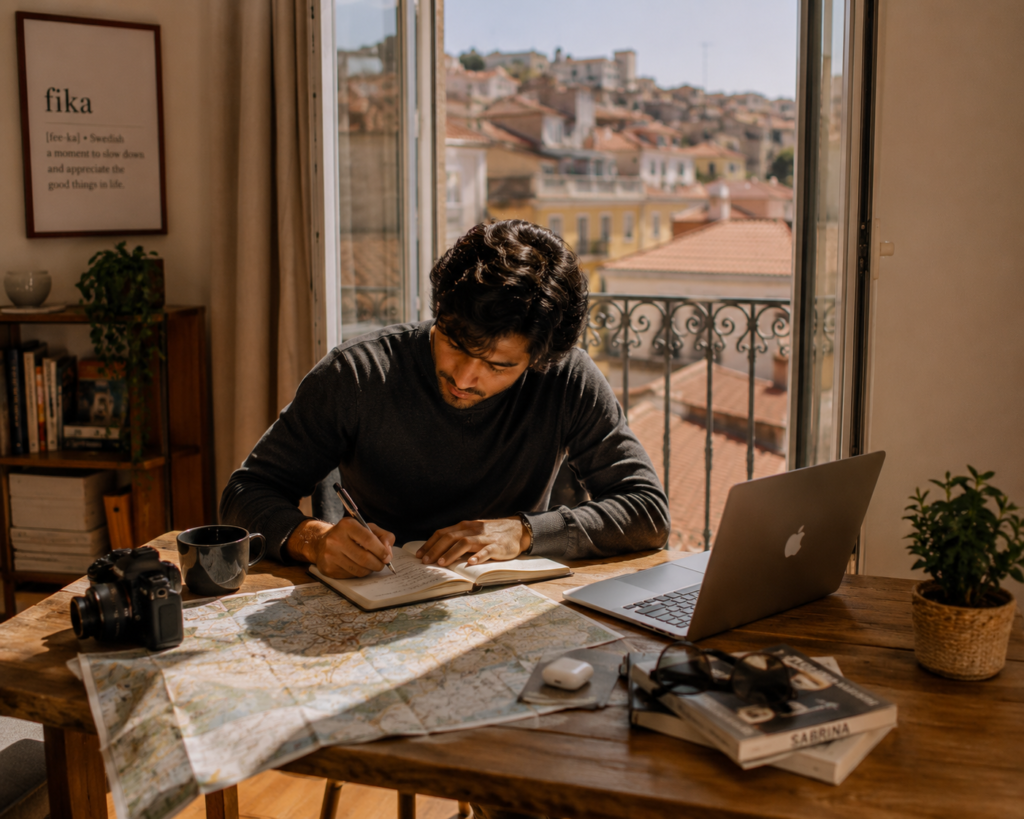
Over-planning is the enemy of good travel. In slow travel, the best moments are unplanned — the festival you stumbled into, the beach town a local recommended, the afternoon you spent at a bookshop instead of a museum.
Plan anchor activities (a day trip, a restaurant reservation, a visit to a key site) and leave at least 40% of your days as open time.
💡 Pro Tip: Use Google Calendar with travel blocks instead of minute-by-minute itineraries. Color-code “anchors” (confirmed plans) vs “maybes” and protect your free days fiercely.
Focus on Experiences Instead of Checklists
The checklist mentality — “I need to see the Eiffel Tower, the Louvre, and Versailles” — kills slow travel. Instead, ask yourself: what kind of experience do I want to have in Paris? Then build around that feeling, not a list.
Common Mistakes That Ruin Slow Travel
⚠️ Common Slow Travel Mistakes to Avoid
- Trying to visit too many cities (itinerary creep)
- Overplanning every day with scheduled activities
- Staying only in tourist zones — missing real local life
- Ignoring local culture and defaulting to comfort zones
- Turning slow travel into a remote work treadmill
Trying to Visit Too Many Cities
The most common beginner mistake: treating slow travel as an excuse to visit 6 cities instead of 10, still changing location every 3 days. That’s not slow travel — it’s slightly less rushed travel.
Commit to the discomfort of staying put. Resist the FOMO. The places you won’t visit this trip will still be there on the next.
Overplanning Every Day
I’ve met travelers who planned every hour of their slow travel trip — and hated every minute of it. The whole point of slowing down is reclaiming spontaneity. If your days are fully scheduled, you’ve just recreated the traditional travel experience with fewer airports.
Choosing Tourist Zones Only
Staying in the most convenient, most-reviewed neighborhood often means living in a tourist bubble. The local experience you’re after is one metro stop away — but you’ll never find it if you don’t leave the postcard-perfect zone.
Ignoring Local Culture
Slow travel without cultural curiosity is just long-term Airbnb. The depth comes from engaging — learning a few words of the language, understanding local customs, being curious about how people actually live.
Turning Slow Travel Into Remote Work Burnout
This is a growing problem in 2026: digital nomads who call it “slow travel” but work 10-hour days from their rental and never leave the apartment. If your laptop is open more than your front door, you’re not slow traveling — you’re working abroad.
Set working hours. Protect exploration time. Don’t let work colonize your travel.
Best Destinations for Slow Travel in 2026
European Towns Perfect for Slow Travel
Europe remains the gold standard for slow travel — excellent infrastructure, rich history, walkable cities, and outstanding food at every price point. My top picks for 2026:
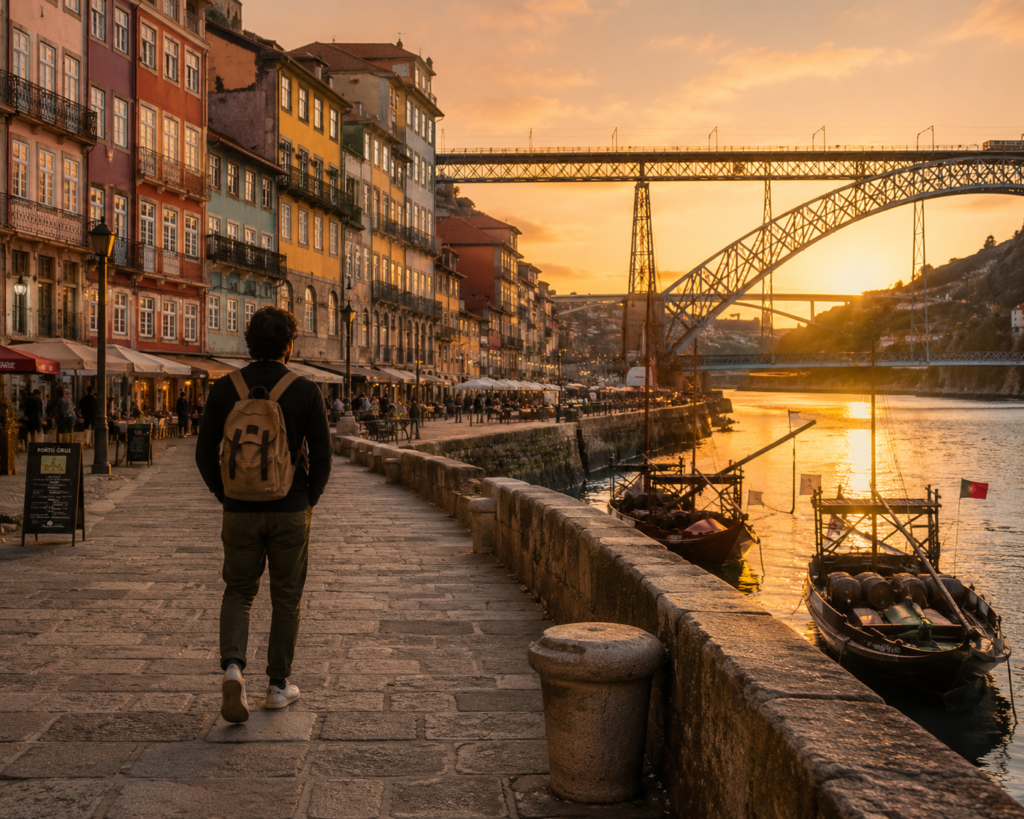
- Porto, Portugal — Affordable, walkable, spectacular food and wine culture
- Bologna, Italy — Underrated, university-town energy, the best food city in the country
- Ljubljana, Slovenia — Small, safe, stunningly beautiful, very affordable
- Plovdiv, Bulgaria — Bohemian arts scene, excellent food, extremely low cost
- Ghent, Belgium — All the charm of Bruges without the tourist crowds
If you’re planning a European slow travel base, my full breakdown of the best places to visit in Italy is worth reading — several of those destinations are ideal for longer stays.
Affordable Asian Destinations for Long Stays
Asia offers the best value for slow travel in the world. Your money goes 3–5x further than in Western Europe, and the food, culture, and community are extraordinary.
- Chiang Mai, Thailand — The original digital nomad slow travel capital. Monthly rentals from $300
- Hoi An, Vietnam — Magical small town, incredible food, very walkable
- Tbilisi, Georgia — Rapidly growing slow travel hub, wine country, excellent food scene
- Penang, Malaysia — World-class street food, walkable George Town, multicultural
- Medellín, Colombia — Year-round spring weather, vibrant arts scene, very affordable
Best Coastal Destinations for Slow Living
Coastal slow travel hits different. The pace is naturally slower, the food fresher, and the lifestyle more conducive to presence.
- Algarve, Portugal — Golden beaches, relaxed pace, excellent for 2–4 week stays
- Split, Croatia — Medieval city meets Mediterranean coast
- Taormina, Sicily — Dramatic setting, exceptional food, quiet outside peak season
- Oaxacan Coast, Mexico — For something completely off the standard path
For families considering a coastal slow travel trip, I’ve covered the best family vacation destinations in Europe — several coastal options there work brilliantly for longer stays.
Hidden Small Cities Worth Staying In Longer
The best slow travel destinations are often ones you haven’t heard of. These smaller cities reward the longer stay precisely because they’re not optimized for tourists:
- Matera, Italy — Cave dwellings, no crowds outside July–August, incredible atmosphere
- Kotor, Montenegro — Walled medieval city, dramatic setting, emerging slow travel scene
- Nantes, France — Creative, affordable, excellent food — often overlooked for Paris and Lyon
- Wrocław, Poland — Stunning old town, very affordable, great cafe culture
If France is on your list, my guide to the best places to visit in France covers several cities that are perfect for extended stays beyond the obvious Paris.
Places That Are Ideal for First-Time Slow Travelers
First-time slow travelers benefit from destinations with strong expat communities, good English proficiency, reliable infrastructure, and clear long-stay rental markets:
- Lisbon, Portugal — Extremely English-friendly, great weather, safe, active slow travel community
- Barcelona, Spain — Infrastructure for longer stays, incredible food and lifestyle
- Bali, Indonesia — Established slow travel/digital nomad infrastructure, affordable
- Mexico City, Mexico — World-class food, culture, and value — increasingly popular for long stays
Slow Travel Tours: Are They Worth It?
What Slow Travel Tours Usually Include
A genuine slow travel tour is built around depth rather than coverage. Unlike standard group tours, slow travel tours typically include:
- 7–21 days in one or two destinations (not 10 countries in 14 days)
- Small groups (usually 6–14 people maximum)
- Accommodations in local guesthouses or apartments, not hotel chains
- Cooking classes, local market visits, artisan workshops
- Free afternoons and unscheduled exploration time
- Access to local guides who live in the destination year-round
Who Benefits Most From Guided Slow Travel
Not everyone wants to organize their own long-stay trip, and that’s completely valid. Slow travel tours work especially well for:
- First-time slow travelers who want structure before going independent
- Solo travelers who prefer built-in community over isolated self-organization
- Retirees who want the logistics managed without sacrificing authentic experiences
- People visiting a destination with significant language or cultural barriers
Group Tours vs Independent Slow Travel
Here’s the honest comparison: group slow travel tours typically cost 40–70% more than organizing the same trip independently. What you’re paying for is convenience, community, and curated access.
If you’re comfortable with independent planning, self-organized slow travel will almost always deliver a more personalized and affordable experience. If you want social connection and hands-off logistics, a guided tour is genuinely worth the premium.
💡 Pro Tip: Look for tours operated by small local companies, not international travel giants. The itineraries are more authentic, the guides are more knowledgeable, and more of your money stays in the destination community.
Red Flags to Watch Before Booking
Not every tour that uses the word “slow” actually delivers a slow travel experience. Watch out for:
- More than 3 destinations in 2 weeks — that’s not slow travel
- Group sizes above 20 people
- No free time built into daily schedules
- Accommodation in chain hotels rather than local stays
- Itineraries focused on major tourist attractions only
Slow Travel Retirement: Why Retirees Love This Lifestyle
Why Slow Travel Fits Retirement Perfectly
Slow travel retirement is one of the fastest-growing lifestyle trends among people aged 60 and above, and the reasons are obvious when you think about it: retirees have time, travel experience, and often a fixed income that benefits enormously from cost-of-living arbitrage.
The slow travel model — stay longer, spend less per day, live like a local — fits perfectly with what retirees actually want from travel: depth, comfort, routine, and community.
Affordable Countries for Retirement Travel
Some of the best countries for slow travel retirement in 2026:
- Portugal — NHR tax regime, excellent healthcare, English widely spoken, mild climate
- Mexico — Proximity to the US, world-class cuisine, strong expat infrastructure in cities like Oaxaca, San Miguel de Allende, and Mexico City
- Thailand — Legendary affordability, excellent private healthcare, established expat communities
- Greece — Island living, Mediterranean lifestyle, surprisingly affordable outside peak summer
- Colombia — Medellín has become a major slow travel retirement hub — spring weather year-round, vibrant culture
Healthcare, Safety, and Long-Term Stays
For retirees, the three practical concerns that dominate slow travel planning are healthcare access, personal safety, and visa duration.
- Healthcare: Countries like Portugal, Spain, and Thailand have excellent private healthcare at a fraction of US/UK costs. Always secure international health insurance before departure.
- Safety: The cities most popular with slow travel retirees — Lisbon, Medellín, Chiang Mai — have strong expat communities and established safety reputations.
- Visas: Research retirement visas and long-stay permits carefully. Portugal’s D7 visa, Thailand’s retirement visa, and Mexico’s temporary residency are among the most popular options.
Budget Planning for Retirement Travelers
A realistic monthly budget for slow travel retirement by region:
- Southeast Asia (Thailand, Vietnam, Malaysia): $1,200–$2,200/month for comfortable living
- Eastern Europe (Bulgaria, Poland, Romania): $1,500–$2,500/month
- Southern Europe (Portugal, Spain, Greece): $2,000–$3,500/month
- Latin America (Mexico, Colombia): $1,500–$2,800/month
These figures include accommodation, food, local transport, activities, and a travel buffer. International health insurance adds $150–$400/month depending on age and coverage.
💡 Pro Tip: The 50/30/20 retirement travel budget rule: 50% on accommodation, 30% on food and activities, 20% buffer for unexpected costs and travel insurance. Adjust from there.
Common Retirement Travel Mistakes
- Not securing adequate health insurance before departure
- Choosing a destination based on cost alone without visiting first
- Underestimating homesickness and the importance of community
- Failing to research visa renewal requirements before they expire
- Not setting up international banking arrangements in advance
The Slow Traveler Mindset
Learning to Enjoy Less Rush
The hardest part of becoming a slow traveler isn’t the logistics — it’s unlearning the productivity mindset that most of us carry everywhere. We’ve been conditioned to optimize, maximize, and fill every hour with output.
Slow travel requires unlearning this. A morning spent doing nothing at a café, watching the city wake up, is not wasted time. It might be the most valuable hour of your trip.
Why Presence Matters More Than Productivity
Here’s what actually works for building meaningful travel memories: presence. Not planning. Not photo-taking. Not crossing items off a list.
The travelers I’ve met who seem most satisfied — most genuinely enriched by their experiences — share one quality: they’re fully there. They’re not mentally already at the next destination.
How Slow Travel Changes Your Perspective
Something shifts when you spend real time somewhere. The caricatures dissolve. The country becomes specific people, neighborhoods, debates, traditions. You stop thinking in terms of “what Italy is like” and start knowing exactly what your particular corner of Bologna is like at 7am on a Tuesday.
From my experience, this specificity is what makes slow travel transformative — it makes the world real in a way that fast tourism never quite manages.
The Psychology Behind Meaningful Travel
Research in positive psychology supports what slow travelers have always known: experiences that feel meaningful require time, attention, and novelty in context. A two-week stay in one city delivers all three. A 24-hour whistle-stop rarely delivers any.
Slow travel isn’t just more enjoyable — it’s psychologically more enriching. The memories form differently, the growth is more deliberate, and the satisfaction lasts longer.
Essential Tools and Resources for Slow Travelers
Best Apps for Long-Term Travel
- Airbnb (monthly discount filter) — Best platform for finding 30-day furnished rentals
- Booking.com — Good for extended stay deals and guesthouse bookings
- Nomad List — City rankings for cost, safety, internet speed, and community
- iOverlander — Community-sourced recommendations for accommodation and local services
- Google Maps (saved lists) — Build neighborhood maps of your local area
Accommodation Platforms for Monthly Stays
- Airbnb — Monthly discount filters make this the most practical option
- Furnished Finder — US-focused but useful for domestic slow travel
- Spotahome — Great for European long-term rentals
- Flatio — Focused on furnished mid-term rentals across Europe and Latin America
- Local Facebook expat groups — Often the best deals aren’t on any platform
Budget Tracking Tools
- Trail Wallet — Simple, visual travel budget tracker
- Toshl Finance — Good for multi-currency tracking
- Google Sheets — My personal preference: a custom tracker gives you full control
- Wise (formerly TransferWise) — Essential for multi-currency spending and cheap international transfers
Language and Local Navigation Apps
- Duolingo — Daily habit building for basic language skills
- Google Translate (offline download) — Non-negotiable; download before you go
- Citymapper — For local transit in major cities
- Rome2Rio — Great for planning multi-modal transport between destinations
Beginner vs Advanced Slow Travelers
What Beginners Usually Focus On
When starting out with slow travel, most people are focused on the practical mechanics:
- Finding safe, affordable long-stay accommodation
- Managing budget anxiety (“am I spending too much?”)
- Dealing with the discomfort of having unstructured time
- Overcoming the fear of missing out on other destinations
- Learning to navigate local systems (transport, shopping, banking)
What Experienced Slow Travelers Do Differently
After a few slow travel experiences, the focus shifts entirely:
- They choose neighborhoods, not just cities — researching specific districts in advance
- They build daily rhythms immediately — regular café, market, exercise spot
- They invest in language learning before arrival, not after
- They connect with local expat and traveler communities before landing
- They plan for re-visits — slow travelers return to places they loved
How Slow Travel Evolves Over Time
The slow traveler’s journey tends to follow a recognizable arc: first trips are cautious and slightly over-planned; middle-stage trips find the rhythm; advanced slow travelers carry almost nothing, make friends everywhere, and have standing reservations at their favorite establishments before the plane lands.
The more you do it, the easier it gets — and the less you need to plan, because you’ve learned to trust the process.
Slow Travel Checklist Before Your First Trip
Budget Preparation
- Calculate daily budget for your destination (use Numbeo.com for cost of living data)
- Add a 20% buffer for unexpected costs
- Set up a Wise or Revolut multi-currency account
- Notify your home bank of travel dates
- Research ATM fees and cash availability at destination
Accommodation Planning
- Decide on neighborhood (research online expat forums and local Facebook groups)
- Book first 1–2 weeks; negotiate longer stay after arrival if the place works
- Confirm kitchen access (essential for budget cooking)
- Check internet speed — vital for remote workers
- Read reviews specifically from long-stay guests
Travel Insurance Essentials
- Get a policy that covers: medical, evacuation, trip cancellation, and gear theft
- For slow travel retirement: ensure the policy has no maximum-stay limits per country
- Compare SafetyWing, World Nomads, and Allianz for your specific profile
- Check for pre-existing condition coverage if relevant
Visa and Long-Stay Considerations
- Research the standard tourist visa length for your passport at destination
- Identify whether a long-stay visa or digital nomad visa applies
- Check visa renewal options — border runs, in-country extensions
- Join destination-specific expat Facebook groups for current visa experience reports
For European trip planning — including visa and logistics — my guide to planning a trip to Europe covers the foundational steps that apply equally well to slow travel planning.
Mindset Shifts Before Departure
- Accept that unplanned time is productive time
- Commit to not checking flight prices to your next destination until week 3
- Tell people back home that you’ll have less frequent contact — and be okay with that
- Give yourself full permission to love one place instead of many
FAQ About Slow Travel
What is slow travel?
Slow travel is a travel philosophy centered on spending extended time in fewer destinations rather than rushing through many places quickly. The goal is immersion — living temporarily like a local, building genuine connections, and experiencing culture from the inside rather than as a spectator.
Is slow travel cheaper?
In most cases, yes — significantly so. Monthly accommodation rentals cost 40–60% less per night than equivalent hotels. Cooking some of your own meals, using local markets, and eliminating frequent flight costs can reduce your daily travel spend by 30–50% compared to traditional tourism.
How long should a slow travel trip be?
The minimum that starts to feel like slow travel is 7 days per destination. Most experienced slow travelers aim for 2–4 weeks in a single location. For slow travel retirement, 1–3 months per destination is common. There’s no upper limit — some slow travelers spend 6–12 months in a single city.
Is slow travel safe?
Slow travel is, if anything, safer than traditional tourism. You become familiar with your neighborhood, you build relationships with locals, and you’re less visibly “tourist” after the first week. The most popular slow travel destinations — Porto, Chiang Mai, Medellín, Lisbon — have well-established expat communities with excellent safety reputations.
Can families do slow travel?
Absolutely — and many families find it superior to traditional family vacations. Children adapt quickly to new environments when given time to settle, and slow travel allows families to establish routines (school visits, parks, local activities) that create a genuine sense of temporary home. For inspiration, check out options for
family-oriented destinations in my guide to the best family vacation destinations in Europe.
What are the best countries for slow travel?
The best countries consistently recommended by experienced slow travelers include Portugal, Thailand, Mexico, Italy, Georgia (Caucasus), Colombia, Vietnam, Greece, and Spain. These destinations share: affordable long-term rentals, strong food culture, English accessibility, and established slow travel communities.
Is slow travel good for retirees?
Slow travel retirement is a natural fit. Retirees have time, life experience, and a fixed income that benefits from cost arbitrage. Destinations like Portugal, Thailand, and Mexico offer excellent healthcare, strong expat communities, and a dramatically lower cost of living than most Western countries.
Final Thoughts: Why Slow Travel Is Becoming the Future of Travel
What Actually Makes Travel Memorable
After years of traveling — rushing through some places, lingering in others — the pattern is clear: the trips I remember most vividly, the ones that actually changed me, are the ones where I slowed down.
Not the most exotic destinations. Not the most impressive landmarks. The memory is never the Eiffel Tower — it’s the bakery I found by getting lost on the way back from the Eiffel Tower, where the owner taught me three words in French and gave me a free croissant.
That’s what slow travel is, fundamentally: creating the conditions for those moments to happen.
Why Slowing Down Changes Everything
The world is moving faster. Work is more demanding. Digital life is more saturated. And in that context, choosing to travel slowly is almost a radical act — a deliberate reclamation of presence over productivity, depth over documentation.
What I’ve seen in travelers who make this shift is consistent: they come home not exhausted, but filled. Not with photos to post, but with stories that don’t fit in a caption.
Your First Step Toward Slow Travel in 2026
You don’t need to overhaul your entire approach to travel overnight. Start with one change on your next trip:
- Pick one destination you’d normally visit for 3 days — and stay for 7 instead
- Book an apartment instead of a hotel
- Delete two stops from your next itinerary
- Give yourself one completely unplanned day and see what happens
That’s the beginning of slow travel. And in my experience, once you’ve tried it properly — once you’ve felt that shift from tourist to temporary local — you won’t want to go back.
If you’re planning your first slow travel destination in Europe, my guides to the best places to visit in Italy, solo travel in Europe, and Italy trip planning are great starting points for building your first slow travel itinerary.
🌍 Ready to Start Your Slow Travel Journey?
Here’s your 3-step action plan:
- Choose ONE destination from this guide that genuinely excites you
- Commit to staying a minimum of 10 days — and delete every other stop from your itinerary
- Book accommodation with a kitchen. Then go find your favorite café on day one.
The world rewards those who stop rushing through it. Slow down — and see what you’ve been missing.