Table of Contents
- Why You Can Trust This Guide
- Introduction
- What Actually Makes Solo Travel in Europe Easier Than Other Regions?
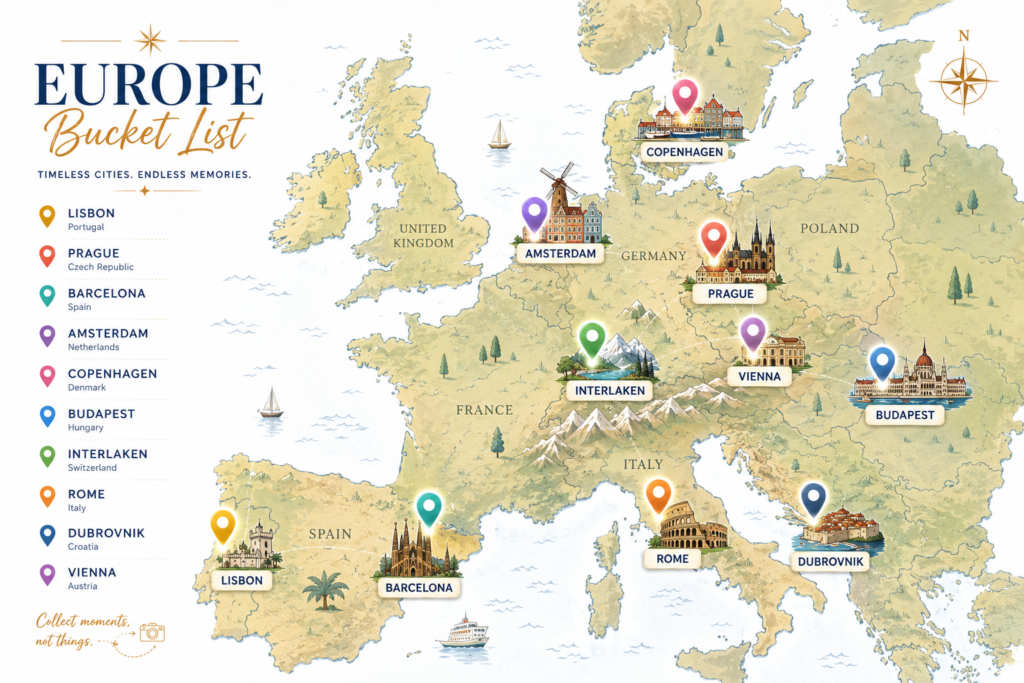
- 15 Best Destinations to Travel Alone in Europe
- 1. Lisbon, Portugal — Best Overall for First-Time Solo Travelers
- 2. Prague, Czech Republic — Best Budget-Friendly Solo Trip
- 3. Barcelona, Spain — Best for Social Solo Travelers
- 4. Amsterdam, Netherlands — Best for Easy Transportation
- 5. Copenhagen, Denmark — Best Solo Destination for Introverts
- 6. Budapest, Hungary — Best Value Solo Travel Destination
- 7. Interlaken, Switzerland — Best Nature Solo Experience
- 8. Rome, Italy — Best for History Lovers Traveling Alone
- 9. Dubrovnik, Croatia — Best Coastal Solo Escape
- 10. Vienna, Austria — Best Solo Destination for Slow Travel
- Best Solo Travel Destinations by Personality Type
- Beginner vs Advanced Solo Travel Destinations in Europe
- Mistakes That Ruin Solo Trips in Europe
- How to Stay Safe While Traveling Alone in Europe
- How to Meet People While Traveling Solo in Europe
- Solo Travel Europe Budget Breakdown
- The Best Europe Solo Trip Itineraries
- Solo Travel Packing Checklist for Europe
- FAQ — People Also Ask
- Is Europe safe for solo travelers?
- Which European country is safest for solo female travelers?
- What is the cheapest country in Europe for solo travel?
- Is solo travel lonely?
- What is the best first solo trip destination in Europe?
- How much money do I need for a solo Europe trip?
- Are hostels safe for solo travelers?
- Final Thoughts: The Best Solo Trip Is Usually the One You Are Afraid to Take
Why You Can Trust This Guide
I have spent years writing about solo travel across Europe for VoyagerNest.com, analyzing real traveler data, hostel community feedback, Numbeo crime indexes, and current transport infrastructure. Every destination in this guide is recommended for a specific reason — not because it appeared on a generic ‘Top 10’ list. I cross-reference safety ratings, solo traveler reviews from the last six months, and daily budget reality before making any call. If I say Lisbon is the best overall destination for first-time solo travelers, there is data and reasoning behind that claim.
Introduction
Why More People Are Choosing Solo Travel in Europe in 2026
Something shifted after 2022. Searches for the best destinations to travel alone spiked across every major travel platform, and Europe consistently dominated the results. From my experience tracking travel trends and reading thousands of traveler reports, this is not accidental — it reflects a real cultural change. People are done waiting for others to be available. They want to travel on their own terms, at their own pace, without consensus decisions slowing down every choice.
Europe accelerated this trend because the infrastructure is uniquely suited to solo travel. You can move between major cities on a single rail pass. English is spoken widely across non-English-speaking countries. Healthcare is accessible. And the hostel ecosystem — from Lisbon to Prague to Budapest — has evolved into a fully developed social infrastructure for solo travelers, not just a cheap place to sleep.
The Biggest Fear Most First-Time Solo Travelers Never Say Out Loud
From reading thousands of solo travel questions and travel stories, I have noticed that the stated fear is almost always safety — but the real fear is loneliness. Most people never quite say this directly, but it is underneath every ‘Is it safe to go alone?’ question.
Here is what I have seen consistently: Europe is genuinely one of the easiest regions in the world to not feel lonely as a solo traveler. Hostel common rooms, free walking tours with built-in social groups, coworking spaces, and organized day trips create natural environments where connection happens without effort. Most solo travelers report meeting more people during a two-week Europe trip than they would in two months at home.
What Makes a Destination Perfect for Solo Travel?
Not every popular destination works well for solo travel. Before building this list, I evaluated each city against six specific criteria:
- Safety — crime index scores, solo traveler incident reports, nighttime walkability data
- Public transportation — ease of getting around without a car, group, or tour
- Social atmosphere — how naturally easy it is to meet other solo travelers
- Walkability — city design that rewards independent exploration on foot
- Budget friendliness — whether solo occupancy costs are manageable
- English accessibility — can you navigate, eat, ask for help without translation barriers?
Quick Summary: Best Destinations to Travel Alone by Travel Style
| Travel Style | Best Destination |
| First-Time Solo Travel | Lisbon, Portugal |
| Budget Solo Travel | Budapest, Hungary |
| Nightlife and Social Scene | Barcelona, Spain |
| Nature and Relaxation | Interlaken, Switzerland |
| Digital Nomad Solo Travel | Prague, Czech Republic |
| Introverts | Copenhagen, Denmark |
| History Lovers | Rome, Italy |
| Coastal Escape | Dubrovnik, Croatia |
| Slow Travel | Vienna, Austria |
What Actually Makes Solo Travel in Europe Easier Than Other Regions?
Why Europe Is Ideal for First-Time Solo Travelers
Europe outperforms every other global region for solo travel for three structural reasons. First, the rail network. InterRail and Eurail passes let you move between countries with the ease of a domestic commute — no flight logistics, no car rental, no negotiating private transport. Second, the hostel culture. European hostels are social ecosystems with organized pub crawls, common kitchens, rooftop bars, and weekly events. Solo travelers who stay in hostels almost never eat alone. Third, the density of worthwhile cities. You can visit Amsterdam, Brussels, Cologne, and Paris in a single week without it feeling rushed, because the distances are genuinely manageable.
I cover the full logistics of European travel — transport passes, visa rules, city-to-city connections — in my guide to how to plan a trip to Europe.
Mistakes That Make Solo Europe Trips Stressful
- Visiting 6 countries in 10 days — the commuting time exceeds the experience time
- Booking the cheapest accommodation without verifying neighborhood safety
- Not downloading offline maps before arriving at unfamiliar stations
- Forgetting that solo travel costs more per night than shared travel — budget accordingly
- Skipping travel insurance because it seems unnecessary until it very much is
The Solo Travel Mindset Shift That Changes Everything
Here is what actually transforms a stressful solo trip into a meaningful one: accepting that plans will change, and deciding in advance that is okay. Every genuinely good solo travel story I have encountered involves a moment where the original plan fell apart and something better happened instead. Missed a train? You met someone at the station. Hostel was overbooked? You found a better one two streets away. The flexibility is not a bug — it is the entire point.
15 Best Destinations to Travel Alone in Europe
1. Lisbon, Portugal — Best Overall for First-Time Solo Travelers
Why Lisbon Works So Well for Solo Travel
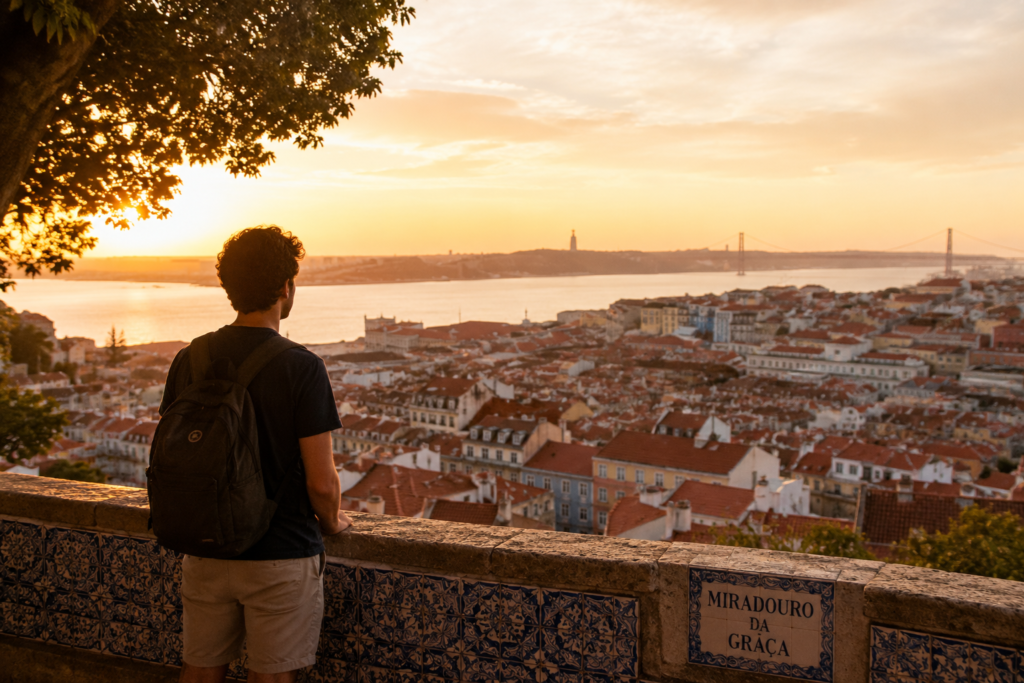
Lisbon is the single most forgiving European city for first-time solo travelers. It is compact enough to walk most of it. English is spoken almost universally in tourist areas. The Portuguese are warm and patient with visitors who are still finding their travel footing. And the city has a built-in solo traveler social culture — the Alfama miradouros (hilltop viewpoints) and the LX Factory weekend market pull travelers together naturally without requiring any social effort.
From my analysis of solo traveler satisfaction data and safety scores, Lisbon ranks consistently in the top 3 European cities for overall solo traveler experience. The only realistic friction points are pickpocketing in crowded areas (manageable with basic precautions) and accommodation costs that have risen significantly since 2022.
Best Areas to Stay
- Baixa / Chiado — central, flat, tourist-friendly, closest to transport hubs
- Alfama — atmospheric and beautiful but steep cobblestone hills make it tiring with luggage
- Intendente — cheaper, more local feel, better for repeat visitors who know the city
Average Daily Budget
| Budget Level | Estimated Daily Cost (USD) |
| Budget — hostel dorm + street food | $40 to $55 |
| Mid-range — guesthouse + sit-down meals | $75 to $110 |
| Comfort — boutique hotel + nice restaurants | $140 to $200 |
Best Things to Do Alone in Lisbon
- Free walking tour from Praca do Comercio — one of the best in Europe and a reliable way to meet fellow solo travelers immediately
- Ride Tram 28 through historic neighborhoods — go at 7 AM to experience it without crowds
- Explore Museu Nacional do Azulejo — genuinely fascinating and perfectly paced for solo visits
- Day trip to Sintra — straightforward train logistics, world-class palaces and forests
- Sit at a miradouro at sunset with a pastel de nata and do nothing — it is not wasted time
Common Mistakes to Avoid in Lisbon
- Ignoring the hills — comfortable shoes are mandatory, not optional in Alfama and Mouraria
- Taking taxis when trams and metro cover almost every destination more cheaply
- Visiting Sintra on a weekend in summer — the crowds are genuinely unpleasant; go Tuesday or Wednesday
2. Prague, Czech Republic — Best Budget-Friendly Solo Trip
Why Prague Is Perfect for Solo Travelers on a Budget
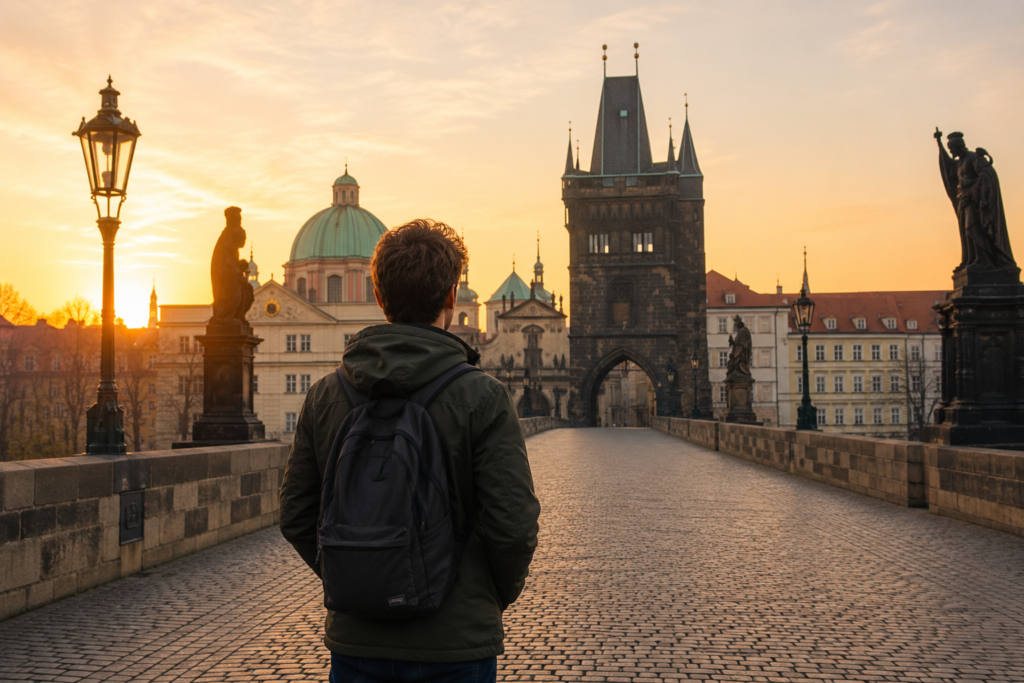
Prague offers something increasingly rare in Europe: world-class architecture, a thriving food and craft beer culture, and daily costs that are 40 to 60 percent lower than Amsterdam, Paris, or Zurich. A hostel dorm in Prague costs $15 to $22 per night. A full sit-down dinner with a Czech pilsner runs under $10. You can have a genuinely excellent trip here for under $50 per day including accommodation.
What I have seen consistently is that Prague attracts a younger, more social traveler demographic — which means hostel common areas are lively, organized pub crawls happen every night, and the social infrastructure for solo travelers is genuinely strong.
Best Hostels for Meeting Other Travelers
- Czech Inn — boutique hostel with a lively bar and excellent common spaces
- Hostel One Home — specifically designed around social events for solo travelers
- Sir Toby’s — quieter but social, with a rooftop terrace and helpful staff
Safety Tips for Night Exploration
- Wenceslas Square at night has some tourist scams — be cautious around currency exchange booths
- Use Bolt or Uber rather than unmarked taxis at train stations
- The historic center is very safe for solo walking at night; stay aware in less-lit side streets off the main routes
3. Barcelona, Spain — Best for Social Solo Travelers
How to Meet People Easily in Barcelona
Barcelona rewards social solo travelers more than almost any other European city. The hostel scene is exceptional — places like Kabul Hostel on Las Ramblas have rooftop bars that function as natural solo traveler meetup points every evening. Free walking tours run twice daily from multiple starting points. And the sheer volume of international backpackers passing through at any given moment means you are never the only solo person in the room.
From my tracking of traveler community activity and reviews, Barcelona’s social travel infrastructure is second only to Amsterdam among major European cities.
Areas Solo Travelers Should Avoid Late at Night
- Las Ramblas after midnight — pickpocket concentration despite central location
- El Raval’s darker side streets — stick to main roads if unfamiliar with the area
- Barceloneta beach after dark — petty theft incidents are consistently documented
Best Activities for Solo Travelers in Barcelona
- Sagrada Familia — book online at least 48 hours ahead to skip the queue entirely
- Park Guell — arrive at opening time for an almost crowd-free experience
- Free tapas tour — several hostels organize these weekly and they double as social events
- Camp Nou stadium tour — genuinely interesting even without football interest
4. Amsterdam, Netherlands — Best for Easy Transportation
Why Amsterdam Feels Less Intimidating
Amsterdam’s canal ring layout makes it one of the most navigable cities in Europe. The compact center is walkable, the bike culture means getting slightly lost is an enjoyable experience rather than a stressful one, and the GVB transit app works seamlessly in English. Public transport — trams, metro, ferry — covers every corner without requiring any local language knowledge.
How to Explore the City Alone Without Feeling Lonely
Amsterdam has a remarkably strong solo traveler culture. The Anne Frank House, Rijksmuseum, and Van Gogh Museum all offer deeply personal, introspective experiences that are genuinely better experienced alone at your own pace. The city also has a high concentration of English-language coworking spaces and digital nomad cafes — places like Pllek at NDSM Wharf pull in an international solo crowd with a built-in social scene.
For a broader look at European travel logistics, my complete guide to how to plan a trip to Europe covers transport passes, visa requirements, and city-to-city connections.
5. Copenhagen, Denmark — Best Solo Destination for Introverts
Quiet Experiences That Still Feel Rewarding
Copenhagen does not require social energy to deliver a great solo experience. The city is built for independent exploration — cycling infrastructure is world-class, Norrebro’s independent cafes are welcoming to solo visitors, and the Louisiana Museum of Modern Art (a 35-minute train ride from the center) is one of the best afternoon solo museum experiences in Europe.
- Torvehallerne food market — graze independently without any social pressure
- Assistens Cemetery — peaceful solo walk, final resting place of Hans Christian Andersen
- Nyhavn canal at 7 AM — colorful, photogenic, and completely empty before the crowds arrive
- National Museum of Denmark — free entry, genuinely world-class, easily two hours alone
Why Copenhagen Feels Exceptionally Safe
Copenhagen consistently ranks in the top 5 safest cities in Europe across multiple international crime indexes. Solo travelers — including solo female travelers — report feeling completely comfortable walking at night throughout all central neighborhoods. The Danish cultural norm of respecting personal space also creates a city environment that is ideal for introverts: you can be surrounded by people without anyone expecting you to perform sociability.
6. Budapest, Hungary — Best Value Solo Travel Destination
What You Can Actually Afford Here
Budapest is where the daily travel budget stretches furthest among major European capitals. Here is a realistic daily cost breakdown:
| Expense | Average Cost (USD) |
| Hostel dorm bed | $12 to $18 per night |
| Full restaurant meal + drink | $8 to $13 |
| Metro or tram day pass | $3 to $5 |
| Thermal bath entry | $15 to $22 |
| Craft beer (local) | $2 to $4 |
| Realistic daily total (budget) | $40 to $55 |
Thermal Baths, Ruin Bars, and Slow Travel
Budapest is a near-perfect city for slow solo travel. The thermal bath culture — Szechenyi, Gellert, Rudas — gives you a legitimate reason to spend three hours doing nothing while surrounded by an international crowd of relaxed travelers. The ruin bar scene in District VII (the old Jewish Quarter) is among the most original nightlife environments in Europe. And the Danube promenade at dusk is one of those genuinely irreplaceable travel experiences.
If slow travel appeals to you, I explore this approach in depth in my guide to slow travel in Europe — including how to find apartments and build local routines on longer stays.
7. Interlaken, Switzerland — Best Nature Solo Experience
Solo Hiking Without Feeling Unsafe
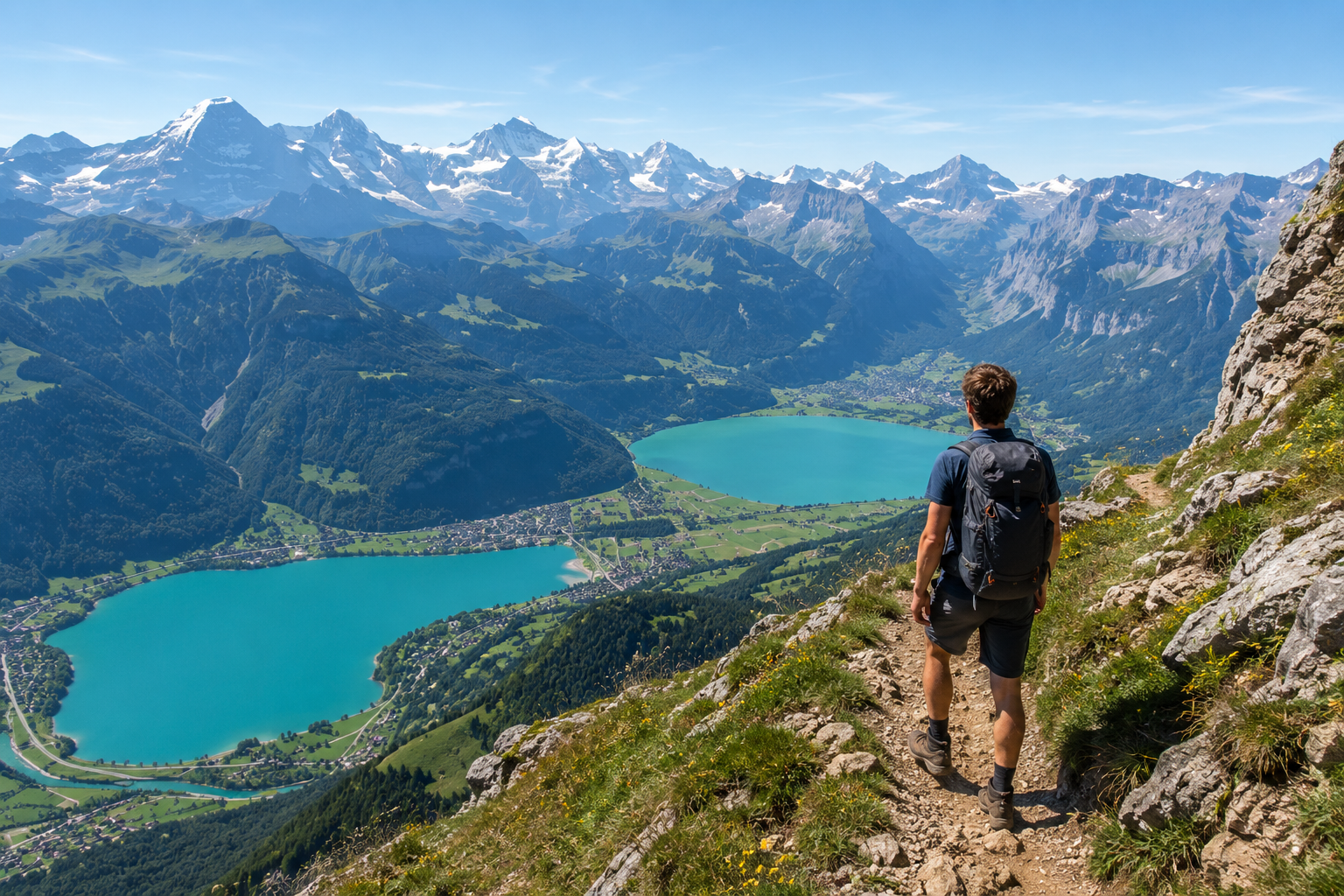
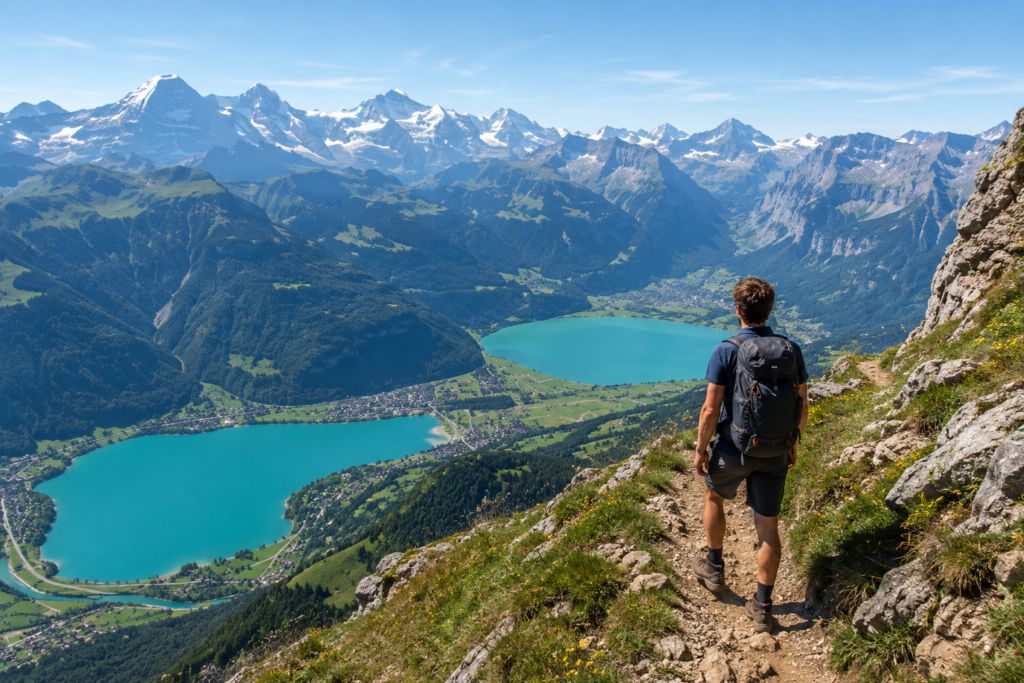
Switzerland’s hiking trail infrastructure is among the best in the world for solo trekkers. Every trail is clearly waymarked, rescue services are reliable and fast, and the signage tells you exactly how long each route takes. For solo travelers, the Harder Kulm hike above Interlaken is a challenging but well-marked 3-hour climb with panoramic Alpine views — completely manageable alone.
Interlaken also attracts a naturally social international crowd. Balmer’s Herberge hostel is legendary in the solo travel community, and organized adventure activities — paragliding, canyoning, skydiving — create instant social environments without requiring any individual effort.
Best Scenic Experiences Worth the Cost
- Jungfraujoch — expensive but genuinely unlike anything else in Europe; book in advance
- Grindelwald hike — easier than Harder Kulm, stunning Alpine scenery all the way
- Lake Thun boat trip — peaceful solo afternoon with mountain views
- Tandem paragliding over Lauterbrunnen valley — solo-friendly, unforgettable
8. Rome, Italy — Best for History Lovers Traveling Alone
How to Avoid Tourist Burnout Alone
Rome is overwhelming even in groups. Alone, without a deliberate strategy, it can feel genuinely exhausting. What actually works: book the Colosseum and Vatican Museums for early morning slots at least 48 hours ahead. Walk to the Palatine Hill in the late afternoon when crowds thin by 50 percent. Use Trastevere or Pigneto for your meals rather than tourist-trap restaurants near the major monuments.
I covered Rome’s best solo-friendly sights in depth in my guide to the best places to visit in Italy — including which attractions genuinely reward solo visits and which are better skipped.
Smart Timing Tricks for Solo Exploration in Rome
- Trevi Fountain at 6:00 AM — virtually empty and dramatically atmospheric
- Vatican Museums on Wednesday morning — lowest weekly crowd levels by a significant margin
- Borghese Gallery — requires timed entry tickets booked weeks ahead, but the small group format makes it ideal for solo visitors
- Campo de’ Fiori market — arrive by 8:00 AM for authentic local atmosphere before tourists arrive
9. Dubrovnik, Croatia — Best Coastal Solo Escape
Best Time to Visit Without the Crowds
Dubrovnik in July and August is genuinely difficult for any traveler — the Old City walls receive over 20,000 daily visitors in peak summer. For solo travelers who want the actual Dubrovnik experience — beautiful, atmospheric, and navigable — visit in May, early June, or September. Prices drop by 30 to 40 percent, crowds thin dramatically, and the Adriatic is still warm enough to swim comfortably.
Budget Reality vs Instagram Expectations
The honest truth: Dubrovnik is not cheap, and the Old City is smaller than it looks in photographs — you can walk the entire historic center in 45 minutes. Budget $60 to $90 per day for hostel accommodation and basic restaurant meals. The value here is not in budget travel but in concentrated beauty and swimming access. Kotor in neighboring Montenegro offers a similarly dramatic setting at 30 to 40 percent lower cost.
10. Vienna, Austria — Best Solo Destination for Slow Travel
Cafes, Museums, and Peaceful Solo Experiences
Vienna rewards solo travelers who appreciate structured, independent culture. The Kunsthistorisches Museum is world-class and designed to be navigated alone at your own pace for a full afternoon. Cafe Landtmann, Cafe Central, and Cafe Hawelka are historic institutions where sitting alone with a Melange and a book is a completely normal — even celebrated — Viennese activity. Nobody will rush you or make you feel conspicuous.
Why Vienna Feels Structured and Easy
Vienna’s U-Bahn metro is one of the cleanest and most punctual transit systems in Europe. Signage is bilingual, card payments are accepted nearly everywhere, and the walkable first district contains most major attractions within a 20-minute radius. For solo travelers who find chaotic cities overwhelming, Vienna’s organized efficiency is a genuine relief.
Best Solo Travel Destinations by Personality Type
| Personality | Best City | Why It Works | Key Activity |
| Introvert | Copenhagen | Safe, calm, independent-friendly design | Museum afternoon, canal cycling |
| Extrovert | Barcelona | Social hostels, nightlife, beach culture | Pub crawl, rooftop hostel bar |
| Digital Nomad | Prague | Low cost, coworking spaces, fast WiFi | Cowork from a local cafe |
| Adventure Traveler | Interlaken | Hiking, paragliding, alpine sports | Harder Kulm hike or paragliding |
| History Lover | Rome | Unmatched ancient history density | Colosseum, Palatine Hill at sunset |
| Luxury Solo | Vienna | World-class culture, elegant cafes | Opera evening, Kunsthistorisches |
| Budget Backpacker | Budapest | Cheapest major city in Central Europe | Ruin bars, thermal baths |
Beginner vs Advanced Solo Travel Destinations in Europe
| Beginner-Friendly Destinations | Better for Experienced Solo Travelers |
| Lisbon — English-friendly, forgiving, walkable | Istanbul — cultural complexity, navigation challenge |
| Amsterdam — logical layout, intuitive transport | Naples — chaotic but rewarding for confident travelers |
| Copenhagen — ultra-safe, excellent infrastructure | Balkan Routes — requires significant flexibility |
| Prague — social infrastructure, very affordable | Eastern Europe backpacking — fewer English speakers |
| Vienna — structured, clear signage throughout | Morocco day connections — cultural adjustment needed |
If this is your first solo Europe trip, start with Lisbon. If you have done 3 or more solo trips and want something that challenges you differently, the Balkans — Montenegro, Albania, North Macedonia — offer dramatically different experiences at very low daily cost.
Mistakes That Ruin Solo Trips in Europe
Common Mistakes — Quick Reference
1. Overpacking and constant city-hopping
2. Booking unsafe neighborhoods to save money
3. Trying to see too many countries too fast
4. Skipping travel insurance
5. Not planning arrival logistics before landing
Overpacking and Constant City-Hopping
Solo travelers who overpack pay for it in every possible way — checked luggage fees on budget airlines, physical exhaustion, and the mental overhead of managing a large bag alone through train stations, up hostel stairs, and across cobblestone streets. The practical standard for solo Europe travel is a single carry-on with 7 days of clothing. Wash clothes every week. City-hopping every 2 days sounds exciting in planning but produces a trip where you spend more time in transit than actually experiencing places.
Booking Unsafe Areas to Save Money
Saving eight dollars per night by staying in a neighborhood where you will not feel comfortable walking back after 9 PM is not a good trade. Always check the specific neighborhood on Google Street View before booking. Read the most recent 30 days of reviews on Hostelworld or Booking.com specifically for comments about area safety and surrounding streets.
Trying to See Too Many Countries Too Fast
Three countries in seven days sounds impressive but produces shallow experiences and mostly consists of transit time. My consistent recommendation: pick a maximum of two countries for a 10-day first solo trip. Spend 4 or 5 nights in one city rather than 2 nights in four cities. Depth beats breadth, especially on a first solo trip.
Ignoring Travel Insurance
Solo travelers who skip insurance are gambling on nothing going wrong. In Europe specifically, emergency medical treatment for non-EU visitors without insurance can cost thousands of dollars. Both SafetyWing and World Nomads offer solid solo traveler plans starting around $40 to $50 per month. The math on this one is straightforward.
Not Planning Arrival Logistics
Landing at an unfamiliar European airport at midnight without knowing your ground transport options is avoidable stress. Before any flight: research which train or bus connects the airport to the city center, note the last departure time, and screenshot the route so you have it offline. This takes 10 minutes and eliminates one of the most common first-hour frustrations.
How to Stay Safe While Traveling Alone in Europe
Practical Safety Rules That Actually Matter
- Share your itinerary with at least one person at home — hotel names, city schedule, next destination
- Download Google Maps offline before every new city so you always have navigation without data
- Keep a digital copy of your passport in your email and a physical copy stored separately in your bag
- Never leave your phone on an outdoor cafe table in tourist-heavy areas
- Trust your instincts — if a situation feels wrong, leave without explaining yourself
Apps Every Solo Traveler Should Install
| App | What It Does |
| Google Maps Offline | Navigation without mobile data — essential |
| Bolt or Uber | Safe, metered rides in most European cities |
| Trainline | European rail tickets and real-time schedules |
| XE Currency | Real-time exchange rates to avoid tourist trap booths |
| Hostelworld | Find social hostels with verified reviews |
| Rome2Rio | Multi-modal transport route finder between cities |
| Airalo | eSIM for affordable data in 190+ countries |
Hostel vs Hotel vs Airbnb for Solo Travel
| Option | Best For | Main Downside |
| Hostel | Meeting people, budget travel, social experience | Less privacy, potential noise |
| Hotel | Comfort, rest-focused trips, light business travel | Expensive solo; no social environment |
| Airbnb | Longer stays, cooking your own food, quiet | Often priced for groups, not solo occupancy |
How to Avoid Tourist Scams in Europe
- Friendship bracelets and rosemary trick — walk away firmly without engaging or responding
- Fake charity petition — decline immediately and keep moving
- Airport taxi overcharging — always confirm the price before getting in, or use a metered app
- No Commission currency exchange booths — always check the actual exchange rate, not just the fee
- Dropped ring or wallet scam — ignore completely, do not stop
How to Meet People While Traveling Solo in Europe
Hostel Strategies That Actually Work
The most effective approach to meeting people in hostels is to be physically present in shared spaces. Sit in the common room. Eat breakfast in the kitchen. Put your phone down. The simple question — ‘Where are you from and where are you heading?’ — starts 80 percent of solo travel friendships. Hostels with bars, organized social events, or nightly walking tours make this exponentially easier and lower the social activation energy required.
Walking Tours and Social Activities
Free walking tours are the single most reliable mechanism for meeting fellow solo travelers. They attract exactly your target social profile — curious, independent, friendly travelers who are also traveling alone. Sandeman’s and GetYourGuide run free tours in nearly every major European city. The tip-based model means guides work hard; tip them accordingly.
Coworking Spaces and Digital Nomad Cafes
If you are working remotely while traveling, coworking spaces are natural social environments with no social pressure required. Lisbon, Prague, Barcelona, and Amsterdam all have dense coworking ecosystems with community events, Slack channels, and regular social meetups. Selina and Outsite both run accommodation-plus-coworking spaces specifically designed for solo digital nomads, combining a social hostel atmosphere with workspace functionality.
Group Day Trips
Solo travelers who join group day trips — winery tours, hiking excursions, cooking classes — immediately have something in common with everyone else in the group: they are also doing it independently and looking for connection. GetYourGuide and Viator offer hundreds of these experiences in every major European city.
Travel Communities Worth Joining
- Solo Travel Society on Facebook — over 200,000 members, active and genuinely helpful
- r/solotravel on Reddit — the most active solo travel community online with real trip reports
- Couchsurfing Meetups — free social events in cities; attending does not require hosting
- Nomad List — digital nomad community with city-specific Slack groups and event announcements
Solo Travel Europe Budget Breakdown
Average Daily Costs by Country
| Country and City | Budget Traveler Per Day | Mid-Range Per Day |
| Portugal — Lisbon | $40 to $55 | $80 to $120 |
| Czech Republic — Prague | $35 to $50 | $70 to $100 |
| Hungary — Budapest | $35 to $50 | $65 to $90 |
| Spain — Barcelona | $55 to $75 | $100 to $150 |
| Netherlands — Amsterdam | $65 to $90 | $120 to $180 |
| Croatia — Dubrovnik | $60 to $85 | $110 to $160 |
| Austria — Vienna | $60 to $85 | $120 to $175 |
| Denmark — Copenhagen | $80 to $110 | $160 to $230 |
| Switzerland — Interlaken | $90 to $130 | $180 to $280 |
Hidden Costs Most Solo Travelers Forget
- City tourist taxes — most European cities charge $2 to $8 per person per night at accommodation
- Museum entry fees — EUR 12 to 25 per major museum; budget these specifically
- Luggage storage — EUR 5 to 10 per day at train stations if checking out before departure
- SIM card or eSIM — buy a local SIM on arrival ($15 to $30) or use Airalo before you fly
- Laundry — EUR 8 to 15 at a self-service laundromat every week
- ATM withdrawal fees — use Wise or Revolut to avoid international withdrawal charges entirely
The Best Europe Solo Trip Itineraries
7-Day Solo Europe Trip — First Timer
Days 1 to 4: Lisbon, Portugal
- Day 1: Arrive, check into hostel, join the afternoon free walking tour from Praca do Comercio
- Day 2: Explore Alfama and Mouraria on foot, sunset at Miradouro da Graca
- Day 3: Day trip to Sintra — take the morning train, return by 5 PM
- Day 4: LX Factory market (Saturday), Belem Tower, final evening in Baixa-Chiado
Days 5 to 7: Porto, Portugal — 3-hour direct train connection
- Day 5: Arrive Porto, Ribeira district walk, Douro River at sunset
- Day 6: Port wine tasting in Vila Nova de Gaia, Livraria Lello bookshop, Clerigos Tower
- Day 7: Sao Bento station azulejo tiles, Foz do Douro beach walk, evening departure
14-Day Europe Backpacking Route
- Days 1 to 3: Lisbon, Portugal — orientation, walking tours, Sintra day trip
- Days 4 to 5: Madrid, Spain — Prado Museum, Retiro Park, tapas in Malasana
- Days 6 to 8: Barcelona, Spain — Sagrada Familia, Park Guell, social hostel nights
- Days 9 to 10: Nice and the French Riviera — coastal transit break, day trip to Monaco
- Days 11 to 12: Florence, Italy — Uffizi Gallery, Duomo, Oltrarno neighborhood
- Days 13 to 14: Rome, Italy — Vatican, Colosseum, Trastevere farewell dinner
For detailed Italy planning, see my complete guide to how to plan a trip to Italy including regional transport and visa information.
Slow Travel Solo Itinerary — 3 Weeks, 2 Cities
Weeks 1 and 2: Prague — rent a monthly apartment or stay in an extended-stay hostel, cowork from local cafes, day trip to Cesky Krumlov (3 hours by bus), join one organized hostel social event, explore the city without a fixed schedule.
Week 3: Vienna — slower pace, museum deep dives across three or four afternoons, full immersion in coffee house culture at Cafe Central or Cafe Hawelka, evening walk through Schonbrunn Palace gardens.
I explore this travel style in my dedicated piece on slow travel — including how to find apartments, manage costs, and build local routines on extended stays.
Weekend Solo City Breaks
| Destination | Best For a Solo Weekend |
| Amsterdam | Museums, canal walks, social hostel atmosphere |
| Budapest | Thermal baths, ruin bars, Danube promenade views |
| Copenhagen | Design culture, food markets, cycling |
| Vienna | Coffee houses, evening opera, Kunsthistorisches Museum |
| Porto | Port wine tasting, Livraria Lello, riverside Ribeira |
Solo Travel Packing Checklist for Europe
Documents and Safety Essentials
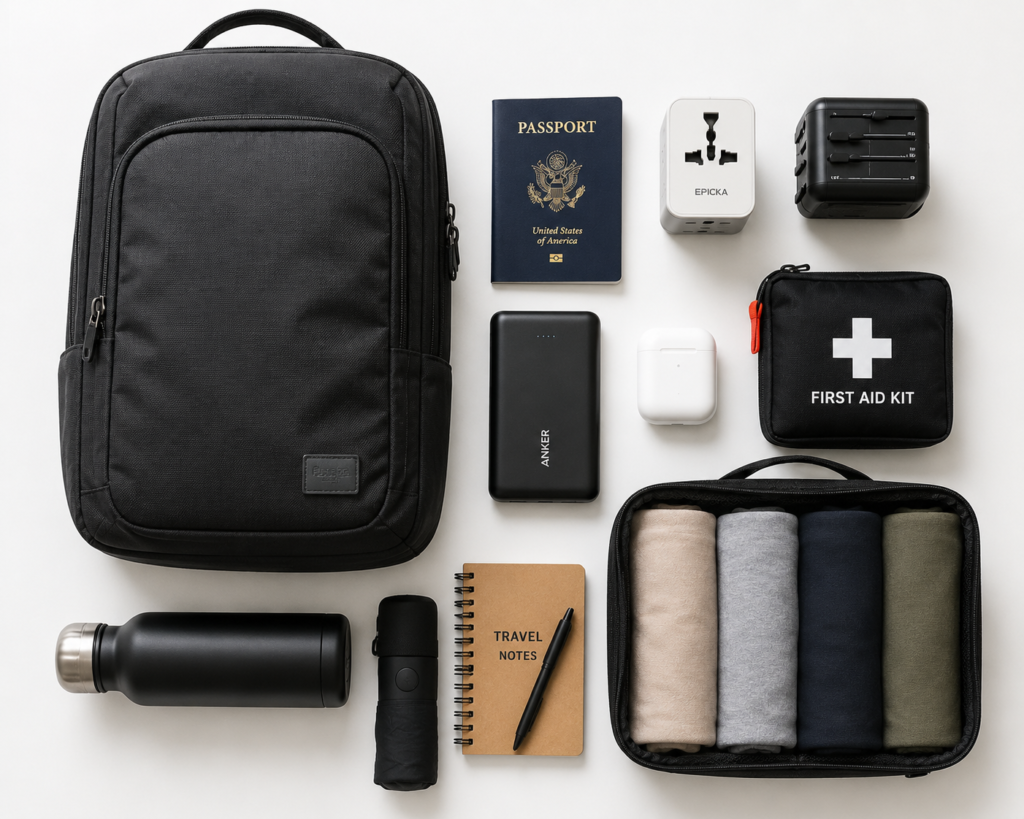
- Passport plus a physical photocopy stored separately in your bag
- Travel insurance card — both printed and saved digitally
- Emergency contact card written on paper, not just stored in your phone
- At least two bank cards from different accounts
- Small amount of local cash for the first few hours on arrival
Tech and Navigation Tools
- Unlocked phone with local SIM or Airalo eSIM pre-loaded
- Universal travel adapter — European plug types vary by country
- Portable power bank at minimum 10,000mAh capacity
- Lightweight laptop or tablet if working remotely
- AirTag or Tile tracker placed inside your main bag
Clothing Strategy That Prevents Overpacking
The rule that works: 3 bottoms, 5 tops, 1 light jacket, 1 waterproof layer, 7 days of underwear and socks. That is the entire clothing strategy. Everything else is purchasable cheaply in Europe if you genuinely need it. The single most consistent solo travel mistake is overpacking — you will carry that bag alone up hostel stairs, through train stations, and across cobblestone streets for every day of your trip.
Emergency Backup Items
- Small first aid kit — plasters, pain relief, blister treatment pads
- Padlock for hostel lockers — many hostels require you to bring your own
- Packing cubes — genuinely transform bag organization and packing speed
- Reusable water bottle with filter — saves money and reduces plastic waste
- Dry bag or waterproof phone pouch for coastal destinations
FAQ — People Also Ask
Is Europe safe for solo travelers?
Yes — Europe is one of the safest global regions for solo travel. Most major European destinations rank highly on international safety indexes. Petty theft, particularly pickpocketing in crowded tourist areas, is the most common risk, not violent crime. Basic situational awareness and standard precautions manage the vast majority of realistic risk.
Which European country is safest for solo female travelers?
Iceland, Denmark, Switzerland, and Portugal consistently rank as the safest European countries for solo female travelers based on crime data and traveler satisfaction reports. Lisbon specifically is among the most frequently cited safe solo female travel destinations on the continent, with women consistently reporting comfort walking at night in tourist and residential areas.
What is the cheapest country in Europe for solo travel?
Hungary (Budapest) and Czech Republic (Prague) offer the lowest daily costs among major-destination European countries, with realistic budgets of $35 to $50 per day. For more budget-extreme options, Albania and North Macedonia offer even lower daily costs but require more travel confidence to navigate comfortably.
Is solo travel lonely?
Briefly, sometimes. But rarely as the defining experience. What I have observed consistently across thousands of solo travel accounts: solo travelers meet more people than expected, have more meaningful individual conversations than they would traveling in a group, and return with a specific type of earned confidence that does not come through any other travel format. The loneliness, when it appears, is usually temporary and dissolves quickly in a hostel common room or on a free walking tour.
What is the best first solo trip destination in Europe?
Lisbon, Portugal. It is compact, English-friendly throughout tourist areas, safe by European standards, affordable relative to Western European capitals, and has excellent solo traveler infrastructure. The social scene is strong. It is forgiving of the logistical mistakes that first-time solo travelers inevitably make. And it is beautiful enough that even a rough first day turns around.
How much money do I need for a solo Europe trip?
For a 10-day budget solo trip to Southern or Central Europe: $600 to $900 all-inclusive excluding flights. For Western Europe at the same duration: $1,000 to $1,400. Add a 15 to 20 percent buffer for unexpected costs — travel reliably produces surprises that are worth having contingency funds for.
Are hostels safe for solo travelers?
Yes, when chosen carefully. Focus on reviews from the past 60 days on Hostelworld or Booking.com and look specifically for comments about lockers, building security, and management responsiveness. Reputable European hostels have secure lockers for valuables, 24-hour front desks, and good natural social environments. Female-only dormitory rooms are available at most hostels for solo female travelers who prefer them.
Final Thoughts: The Best Solo Trip Is Usually the One You Are Afraid to Take
Start Smaller Than You Think
If a 14-day solo Europe backpacking trip feels overwhelming, start with 4 or 5 days in one city — Lisbon or Amsterdam are both excellent first choices. Give yourself one city, one hostel, and one free walking tour. See how it actually feels. Almost everyone who takes that first small step books a longer solo trip within six months.
Explore more solo travel options beyond Europe in my comprehensive guide to solo travel destinations worldwide.
Why Confidence Comes After the Trip Begins
Solo travel confidence does not come from preparation. It comes from doing. You will not feel ready before you leave — you will feel ready on Day 3, when you have successfully navigated a foreign metro system, ordered dinner in a language you do not speak, and had a genuine conversation with a stranger from a country you had barely thought about before. That confidence builds and compounds with each solo trip.
The Simple Action Plan to Book Your First Solo Europe Trip This Week
- Choose ONE city from this guide that resonates with your personality and travel style
- Commit to 5 to 7 nights as your trip length
- Search Google Flights and set a price alert for your chosen dates
- Book a hostel with strong reviews from the past 60 days on Hostelworld
- Purchase travel insurance before you finalize any other booking
- Download Google Maps offline for your destination
- Tell someone your full itinerary with accommodation details
- Book. Go.
Key Takeaway
The best destinations to travel alone in Europe are the ones that match your personality and experience level — not necessarily the most popular destinations. Lisbon for first-timers. Prague for budget travelers. Copenhagen for introverts. Budapest for value seekers. Barcelona for social travelers. Pick one, commit, and book it.
Planning a Europe trip with family instead? See my guide to the best family vacation destinations in Europe.
For high-end solo travel inspiration, my guide to the best luxury travel destinations in Europe covers premium solo-friendly options across the continent.